
Doctor visits and check-ups
85
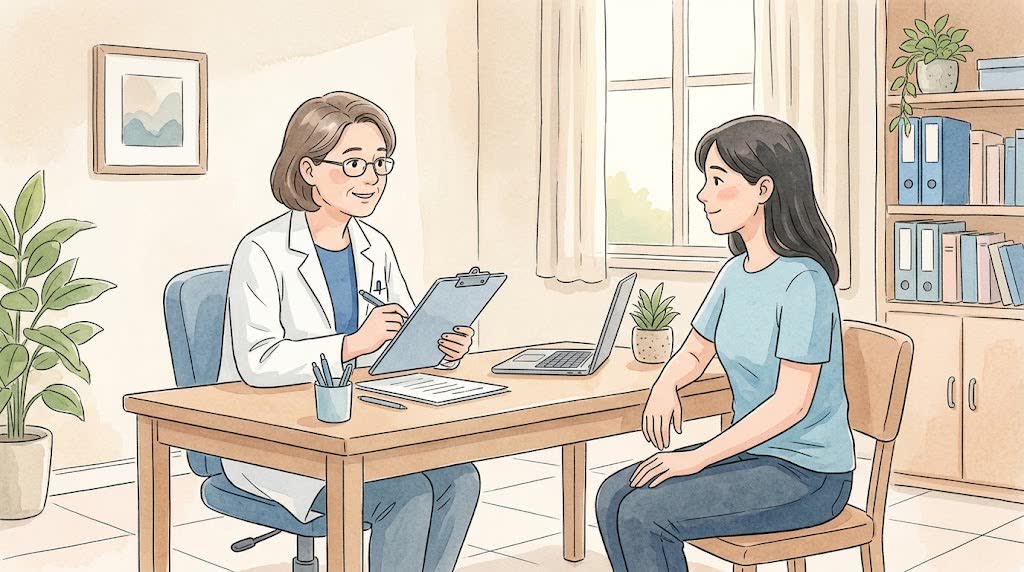
General doctor visitThe first doctor to see. They ask questions, examine you, prescribe treatment, or refer you to a specialist.⏱ usually 15 to 30 minutesFull health checkupA set of tests, scans, and doctor visits in one or a few visits. It helps find problems before they cause symptoms.⏱ usually 2 to 4 hours, sometimes over several daysMedical exam for a certificateA checkup with several doctors, and tests if needed, to get a medical certificate for a driving license, work, or school.⏱ usually 1 to 3 hours, sometimes over several daysChild checkupThe pediatrician checks how your child is growing and developing. Sometimes other doctors, tests, and vaccines are added to the visit.⏱ usually 20 to 30 minutes with the pediatrician. Longer with other doctorsNeurologist visitA doctor who treats the nervous system: brain, spinal cord, and nerves. They ask questions and check your reflexes, strength, and feeling.⏱ usually 20 to 40 minutesEndocrinologist visitA doctor who treats hormone conditions: thyroid problems, diabetes, and weight and metabolism problems.⏱ usually 20 to 40 minutesGastroenterologist visitA doctor who treats the stomach, bowel, liver, gallbladder, and pancreas.⏱ usually 20 to 40 minutesPulmonologist visitA doctor who treats the lungs and airways. They listen to your breathing and check how well your lungs work.⏱ usually 20 to 40 minutesAllergist visitA doctor who finds out what you are allergic to and chooses treatment.⏱ usually 20 to 40 minutesRheumatologist visitA doctor who treats inflammatory conditions of the joints, spine, and connective tissue.⏱ usually 20 to 40 minutesNephrologist visitA doctor who treats kidney conditions and helps keep your kidneys working.⏱ usually 20 to 40 minutesHematologist visitA doctor who treats blood disorders and problems with how blood is made.⏱ usually 20 to 40 minutesOncologist visitA doctor who checks a suspected tumor, orders tests and treatment, and follows you afterward.⏱ usually 20 to 40 minutesSurgeon visitA doctor who decides if you need surgery and treats conditions that surgery can help, from hernias to abscesses.⏱ usually 20 to 40 minutesOrthopedic doctor visitA doctor who treats injuries and conditions of the bones, joints, muscles, and ligaments.⏱ usually 20 to 40 minutesPsychiatrist visitA doctor who helps with problems of mood, anxiety, sleep, thinking, and behavior. They can prescribe treatment and medicines.⏱ usually 20 to 40 minutesPsychologist visitA specialist who helps you work through feelings, relationships, and hard situations by talking. They are not a doctor and do not prescribe medicines.⏱ a session usually lasts 50 to 60 minutes; you decide together how many sessionsPsychotherapist visitA doctor who treats anxiety, depression, and other conditions with talking methods. If needed, they can prescribe medicines.⏱ usually 45 to 60 minutes; you decide on the course together with the doctorInfectious disease doctor visitA doctor who treats infections caused by viruses, bacteria, or parasites, and helps with vaccines before travel.⏱ usually 20 to 40 minutesDermatologist visitA doctor who treats conditions of the skin, hair, and nails, and checks moles.⏱ usually 20 to 40 minutesGenetic counselingA genetics doctor looks at whether inherited conditions run in your family and what the risk is for you or your child. They explain genetic test results in plain words.⏱ the visit usually takes 30 to 60 minutes; genetic test results, if ordered, take from a few days to a few weeksDietitian visitA dietitian looks at how you eat and helps build a diet that suits your health. It is a conversation and some calculations, with no procedures.⏱ the first visit usually takes 30 to 60 minutes; follow-ups are shorterSports medical clearanceA doctor checks whether you or your child can do sports, and at what level. At the end, you get a clearance certificate.⏱ usually 30 minutes to a few hours, if several doctors are needed; the certificate is often given the same dayDriver's medical examSeveral doctors check that you have no conditions that stop you driving safely. Then you get a medical certificate for your license.⏱ usually 1 to 3 hours, if all doctors are in one place; the certificate is often given the same dayOccupational health checkDoctors check that your health suits the job. The doctors and tests depend on your profession.⏱ usually from 1 to 2 hours up to 1 to 2 days if tests are needed; the final report comes after all doctorsSchool and nursery health checkA pediatrician and other doctors examine your child and fill in a medical record for school or nursery. Vaccines and general health are checked.⏱ usually a few days or weeks to see all doctors and do tests; the pediatrician completes the form at the last visitFirst newborn checkupA pediatrician and nurse examine your baby in the first days after you leave the maternity hospital. They often come to your home.⏱ usually 20 to 40 minutesOne-month baby checkupA routine checkup at one month. The doctor checks how your baby is growing and developing.⏱ the pediatrician visit usually takes 20 to 30 minutes; longer if specialists or ultrasounds are neededTeen checkupA routine checkup for a teenager: growth, development, vision, posture, and blood pressure. The doctor talks with both the parent and the teen.⏱ usually 30 to 60 minutes with the pediatrician; longer with other doctorsHealth check after 60A routine health check for people over 60. The doctor checks blood pressure, blood sugar, heart, memory, vision, and fall risk.⏱ usually 1 to 2 visits; test results in 1 to 3 daysOnline doctor consultationA talk with a doctor by video or chat. The doctor asks questions, looks at your test results, and gives advice.⏱ usually 15 to 40 minutesWhat to expect in the emergency roomThe emergency department is the part of a hospital where the ambulance brings you, or you come yourself with an urgent problem. You are examined there, and a decision is made about admission.⏱ usually from 1 to several hours, depending on tests and how busy it isWhen and how to call an ambulanceHow to know it is time to call an ambulance, and what to tell the dispatcher. Call your local emergency number.⏱ talking to the dispatcher usually takes 1 to 3 minutes; arrival time depends on urgency and locationHospital stay: what to bring and expectWhen you are admitted to hospital for treatment or surgery. Here is what to bring and how the first day goes.⏱ depends on the treatment, from one day to several weeksHospital dischargeWhen your hospital treatment is finished and you can go home. You get a discharge summary with advice.⏱ the paperwork usually takes from 1 to several hours on the day of dischargeCheckup for headache and migraineThe doctor asks you in detail about your headaches and examines you. Most often the cause is understood from what you tell them and from the exam, without complex tests.⏱ the visit usually takes 30 to 45 minutesMemory check (dementia screening)The doctor asks questions and gives simple tasks for memory, attention and thinking. This helps notice memory problems early.⏱ the test usually takes 15 to 30 minutes, the visit about an hourPediatric neurologist visitThe doctor checks how your child's nervous system, movement and speech are developing. The exam is calm and painless.⏱ the visit usually takes 20 to 40 minutes, with the report right afterCardiovascular risk assessmentThe doctor estimates how likely a heart attack or stroke is in the coming years. For this, they need your blood pressure, tests, and lifestyle.⏱ a visit usually takes 20 to 30 minutes, and the assessment is given right away or after testsFatty liver: follow-up with a liver specialistThis is when extra fat builds up in the liver. The doctor keeps watch so the liver is not damaged and helps you turn it around.⏱ a visit usually takes 20 to 30 minutes, and follow-up lasts months to yearsProctologist visitThe doctor examines the anus and the rectum. The exam is short, and the doctor is gentle.⏱ the visit usually takes 15 to 30 minutes; conclusion right awayCheck-up for a chronic coughThe doctor looks for the cause of a cough that has not gone away for several weeks. For this they ask questions, examine you, and do a few tests.⏱ the first visit usually takes 20 to 40 minutes; the tests take from a few days to a couple of weeksFoot exam in diabetes (sensation check)The doctor examines your feet and checks how well they feel touch, vibration, and temperature. This helps avoid missing foot sores.⏱ usually 15 to 30 minutes, with the conclusion right awayObesity treatment with a doctorThe doctor helps you lose weight safely and for the long term. They look for causes, make a plan and follow your progress.⏱ the first visit usually takes 30 to 60 minutes, treatment takes monthsOsteoporosis checkup and treatmentThe doctor checks how strong your bones are and, if needed, prescribes treatment to lower the risk of fractures.⏱ the visit usually takes 20 to 30 minutes, the bone density scan about 10 to 20 minutes, with the result usually the same dayGout: treatment and dietGout is when crystals build up in a joint and it suddenly becomes inflamed. The doctor relieves the attack and chooses treatment so that attacks do not come back.⏱ the visit usually takes 20 to 30 minutes, test results in 1 to 2 daysRheumatoid arthritis follow-upThe rheumatologist regularly checks how your treatment is working and whether it is causing harm. This helps protect your joints.⏱ the visit usually takes 20 to 30 minutes; test results in 1 to 3 daysCancer screening by age: what and whenThese are checks that help find cancer early, when nothing bothers you yet. Which ones depend on your age and sex.⏱ a visit usually takes 15 to 30 minutes, the checks themselves are on different days, and results take 1 day to 2 weeksVein doctor visit (phlebologist)The vein doctor examines your legs and usually does a vein ultrasound right away. This shows the condition of your veins and whether you need treatment.⏱ usually 20 to 40 minutes including the vein ultrasound; result right awaySleep doctor visitThe sleep doctor finds out why you sleep badly, snore or feel tired in the day. Sometimes a sleep study is ordered.⏱ the visit usually takes 30 to 40 minutes; a sleep study is one night, with results in a few daysAddiction specialist (narcologist) visitThe doctor helps with dependence on alcohol, medicines and other substances. They also carry out exams for certificates.⏱ the visit usually takes 20 to 40 minutesTB specialist visit (phthisiatrician)The doctor checks whether you have tuberculosis and treats it. Often people are sent just for a check.⏱ the visit usually takes 20 to 30 minutes; tests take from a few days to a couple of weeksGeriatrician visitA doctor for older people looks at your health as a whole: memory, balance, mood and medicines. They help you stay independent.⏱ the visit usually takes 40 to 60 minutesPalliative care at homeDoctors and nurses come to the home of a seriously ill person. They relieve pain and other symptoms and help the family.⏱ a visit usually takes 30 to 60 minutes, follow-up for as long as neededChild with a cold (ARVI): pediatrician visitThe pediatrician examines your sick child and tells you how to treat the cold at home. A cold usually goes away by itself in 5 to 7 days.⏱ the visit usually takes 15 to 20 minutesPediatric endocrinologist visit (growth, weight, puberty)The doctor checks how your child is growing and developing, and whether hormones are getting in the way.⏱ the visit usually takes 20 to 40 minutes, test results in a few daysFree adult health check-upA free health check under your health insurance. The set of tests depends on your age and sex.⏱ the first stage usually takes 1 to 2 visits of 1 to 3 hours, with results in a few daysAge-based screening checks (Kazakhstan)Free checks at the clinic where you are registered. They help find illness early. What is included depends on age and sex.⏱ usually 1 to 2 visits; results in a few daysRegular follow-up for a long-term illnessRegular visits to the doctor for a long-term illness. The doctor checks how treatment is going and keeps the illness from getting worse.⏱ a visit usually takes 15 to 30 minutes, usually 1 to 4 times a year, as your doctor plansMilitary enlistment office medical boardSeveral doctors examine you at the military enlistment office and decide whether you are fit for service on health grounds.⏱ usually half a day or a day; the decision comes on the day of the board or laterMedical check for a firearm permitA medical check that is required to get or renew a firearm permit. It usually includes several doctors and a lab test.⏱ usually 1 to 2 days, the lab result in a few daysHealth book for work (sanitary book)A document in which the results of medical exams and tests are recorded. Without it you cannot work with food or with children.⏱ usually 1 to 3 days for the exams; test results in a few daysMedical certificate for university admissionA health certificate that a university or college requires. It is issued after exams by several doctors and some tests.⏱ usually 1 to 3 days in all; the certificate is issued after the testsSwimming pool certificateA short check-up, after which you get a certificate saying you can swim in a public pool.⏱ usually 15 to 30 minutes if the tests are readyMedical exam for migrants and residence permitsA medical check for foreigners who are getting a work or residence permit. It checks for some infections and sometimes for drug use.⏱ usually 1 to 2 visits, results in a few daysMedical and social assessment (disability)A commission decides whether a person has a disability and what help they need. The decision is based on medical papers and an examination.⏱ gathering papers takes weeks, the assessment itself usually takes up to an hour, and the decision comes the same day or laterPre-trip driver health checkA quick check of the driver before departure: blood pressure, pulse and sobriety. It is done before every trip.⏱ usually 3 to 5 minutesPsychiatrist and addiction doctor certificatesCertificates saying you are not registered with a psychiatrist or an addiction doctor. They are issued at a dispensary or at a clinic that has these doctors.⏱ usually 15 to 60 minutes; the certificate is often given the same dayDiabetes education classesClasses for people with diabetes and their family. A doctor or nurse teaches you how to live with diabetes and manage your sugar.⏱ usually several classes of 1 to 2 hoursLow blood sugar (hypoglycemia): how to recognize it and what to doThis is when the sugar in your blood gets too low. It happens more often to people who inject insulin or take some diabetes pills.⏱ help takes 15 to 30 minutes, and sugar usually rises within 10 to 15 minutesCounting carbohydrates (bread units)This is a way to count how many carbohydrates are in food. Carbohydrates affect blood sugar the most.⏱ learning usually takes a few days of practiceFoot care in diabetesWith diabetes, the feet feel pain less and small wounds heal more slowly. Daily care helps prevent foot ulcers.⏱ usually 5 to 10 minutes a dayA child with diabetes at school and kindergartenA guide for parents on how to prepare school or kindergarten so a child with diabetes stays safe.⏱ preparing usually takes one or two meetings with the teacher and a medical staff memberHow to take thyroid hormone pillsThe pills replace the hormone your thyroid gland is missing. It is important to take them correctly, or they work less well.⏱ a pill every day; a test to check the dose is usually done 6 to 8 weeks after a changeHigh blood pressure at home: what to doA guide on how to measure your blood pressure correctly and what to do if it suddenly goes up.⏱ measuring takes 5 to 10 minutes, getting better usually takes up to an hourLiving with asthma: an action planAsthma is a condition in which the airways narrow easily. With the right treatment and an action plan, most people live a normal life.⏱ the plan is made at a doctor's visit; treatment is usually ongoingAsthma in a child: control and attacksA guide for parents: how to help a child with asthma every day and what to do during an attack.⏱ a plan is made at the visit; treatment is usually long-termLiving with COPDCOPD is a lung disease that makes breathing harder. Treatment and lifestyle help slow it and ease breathlessness.⏱ treatment is usually ongoing, with check-ups on a scheduleLiving with heart failure (weight, swelling, salt)In heart failure the heart pumps blood more weakly. Fluid is held in the body, causing swelling and shortness of breath. Daily checks help you keep the condition under control.⏱ the checks take a few minutes every dayLife after a heart attackAfter a heart attack, the heart takes several months to recover. Medicines, activity, and quitting smoking lower the risk of another one.⏱ recovery usually takes several weeks to monthsChronic kidney disease: diet and monitoringIn chronic kidney disease, the kidneys clean the blood less well. Diet, blood pressure, and regular tests help slow the disease.⏱ tests are usually done every few monthsEpilepsy: first aid during a seizure and daily lifeEpilepsy is a condition with repeated seizures. Medicines help most people. It is important for family and friends to know how to help during a seizure.⏱ a seizure usually lasts 1 to 3 minutesHome care after a strokeA guide for family: how to help a person at home after a stroke, safely and without extra risks.⏱ recovery usually takes months; care is needed every dayHow to take antibiotics correctlyAntibiotics kill bacteria. They do not work on viruses, such as colds and flu.⏱ a course usually lasts a few days; your doctor will say exactlyLiving with atrial fibrillationWith atrial fibrillation, the heart beats unevenly. The main danger is blood clots and stroke, so medicines and check-ups matter.⏱ treatment is usually long-term; check-ups with your doctor follow a schedule