
← All guides · Doctor visits and check-ups
Sleep doctor visit
sleep doctor · sleep specialist · insomnia treatment · snoring and breathing pauses
The sleep doctor finds out why you sleep badly, snore or feel tired in the day. Sometimes a sleep study is ordered.
For insomnia, loud snoring, pauses in breathing during sleep, heavy daytime sleepiness, and restless legs at night.
⏱ Duration: the visit usually takes 30 to 40 minutes; a sleep study is one night, with results in a few days
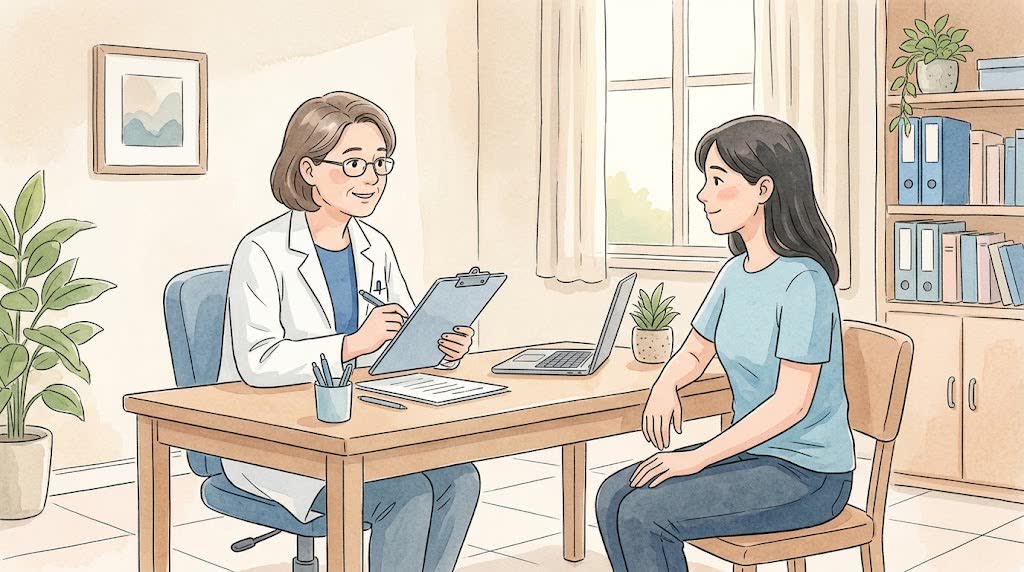
Be sure to tell your doctor
How to prepare
- Sleep diary. For 1 to 2 weeks, write down when you sleep and wake up and how you feel in the morning.
- People close to you. Ask whoever sleeps near you to describe your snoring. You can record the sound on your phone.
- Medicines. Do not stop sleeping pills on your own. Tell the doctor what you take.
What to bring
- Your ID
- Your sleep diary
- A recording of your snoring, if you have one
- A list of your medicines
How it goes
- The doctor asks about your sleep and how you feel in the day
- Offers questionnaires about sleepiness
- Examines your throat and neck, measures blood pressure and weight
- Decides whether a sleep study is needed
- If so, explains how it will be done, at home or at the clinic
- Gives advice or prescribes treatment
What you'll feel
- The visit does not hurt
- In a sleep study you have sensors on your body. Sleeping with them is unusual but painless
Afterwards
- Follow the sleep routine the doctor advised
- If you are sleepy in the day, be careful when driving
- Follow-up visit after the study or after a course of treatment
Contact a doctor straight away if
- You fall asleep at the wheel: do not drive and tell your doctor
- Night attacks of choking with chest pain: call your local emergency number
Common questions
Is snoring dangerous?
Snoring alone is not always. It is dangerous if your breathing stops during sleep, and that needs to be checked.
Can I take sleeping pills on my own?
Better not. The doctor will find the cause of the insomnia and choose the treatment.