
← All services · Doctor visits and check-ups
Genetic counseling
genetic counseling · geneticist · clinical genetics · genetic consultation
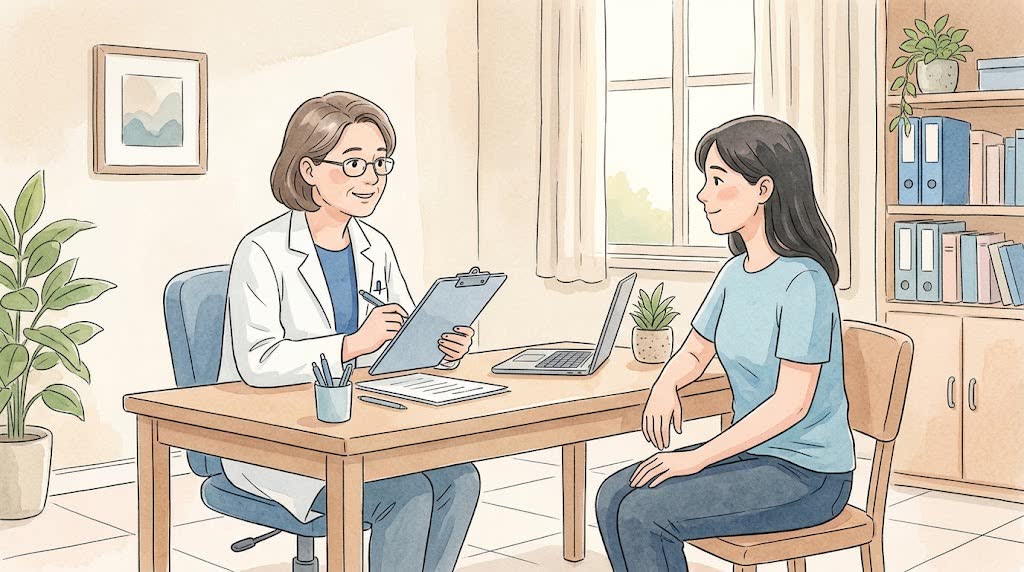
A genetics doctor looks at whether inherited conditions run in your family and what the risk is for you or your child. They explain genetic test results in plain words.
When planning a pregnancy, after unusual screening results, if inherited conditions run in the family, or if a child has developmental differences.
⏱ Duration: the visit usually takes 30 to 60 minutes; genetic test results, if ordered, take from a few days to a few weeks
Be sure to tell your doctor
How to prepare
- Family. Ask your relatives in advance: who had what, at what age, and what your grandparents died of.
- Documents. Gather discharge papers, screening, ultrasound, and test results, yours and your child's.
- Questions. Write down what you want to know. It is easy to forget at the visit.
What to bring
- Your referral, if you have one
- Your ID
- Discharge papers and test results
- Notes on conditions in the family
How it goes
- The doctor asks about you, your pregnancies, and your relatives' health
- A family tree is drawn: who had which conditions
- If needed, you or your child are examined
- The doctor explains what the risk is and what it depends on
- If needed, tests are offered, and the doctor explains what they will show
- You discuss next steps together
What you'll feel
- The conversation can be hard. That is normal. Ask any questions
- You usually make the decisions. The doctor only explains
Afterwards
- If a test was ordered, the clinic will tell you when results are due
- You usually come back for a follow-up with the results
- Ask for a written report
Common questions
Why see a geneticist if everyone in my family is healthy?
Doctors sometimes advise it when planning a pregnancy or after screening. A geneticist will help you understand the risk, and reassure you if it is low.
Does a genetic test hurt?
Usually not. Most often blood is taken from a vein, or a swab from inside the cheek.
Should I bring my partner?
It often helps. The doctor needs the history of both families. Check with the clinic.