
← All services · Doctor visits and check-ups
What to expect in the emergency room
emergency room · ER · emergency department · A&E
The emergency department is the part of a hospital where the ambulance brings you, or you come yourself with an urgent problem. You are examined there, and a decision is made about admission.
For sudden pain, an injury, a high fever, or when an ambulance has brought you to hospital.
⏱ Duration: usually from 1 to several hours, depending on tests and how busy it is
Be sure to tell your doctor
How to prepare
- Documents. Keep your ID and health insurance card or medical record in one place at home, so you can grab them quickly.
- Medicines. Bring a list of your medicines, or the packs themselves.
- Someone with you. If possible, have a family member with you.
What to bring
- Your ID
- A list of your medicines
- Discharge papers, if you have them
- Your phone and charger
How it goes
- You are registered and briefly asked about the problem
- A nurse checks your blood pressure, pulse, and temperature
- The sickest patients are seen first, so the queue is not by arrival time
- A doctor examines you and orders blood tests, an X-ray, or an ultrasound
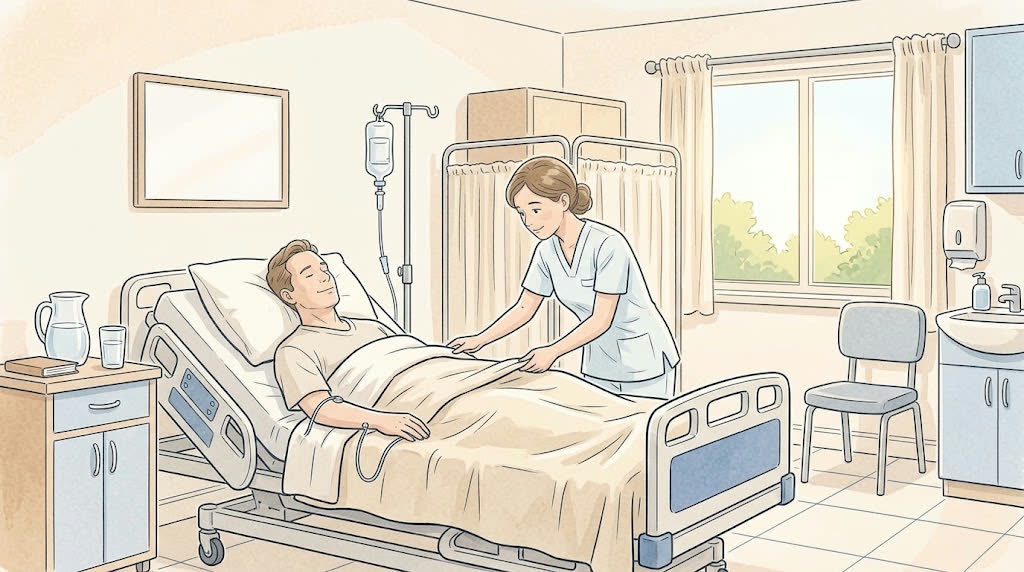
- Based on the results, you go home or are admitted to a ward
What you'll feel
- Waiting can be long. It does not mean you have been forgotten
- If you get worse while waiting, tell a nurse right away
Afterwards
- If you are sent home, ask for a discharge summary and advice
- If you are admitted, you will be taken to the ward
- Ask who to see next
Contact a doctor straight away if
- If you get worse while waiting, with severe pain, trouble breathing, or feeling faint: tell a nurse right away
Common questions
Why was someone who came later seen first?
In the emergency department, those who are sicker are seen first. This is done to save the most serious cases.
Can I come without an ambulance?
Usually yes, if your condition allows. Check which hospital handles your problem.