
← All guides · Doctor visits and check-ups
Cardiovascular risk assessment
heart attack risk · stroke risk · heart risk assessment · risk score
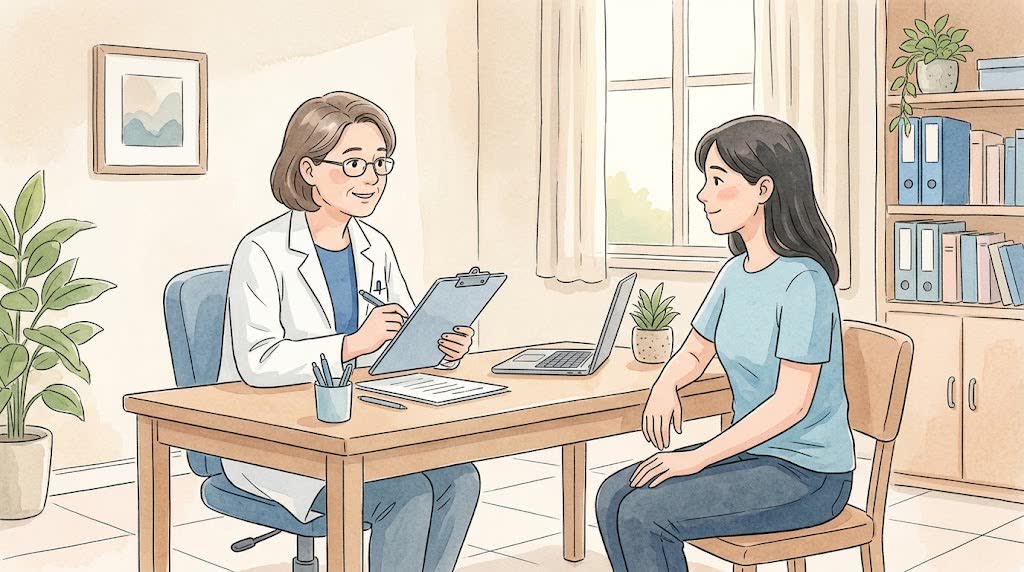
The doctor estimates how likely a heart attack or stroke is in the coming years. For this, they need your blood pressure, tests, and lifestyle.
At preventive check-ups, especially after age 40, and with high blood pressure, high cholesterol, diabetes, smoking, or heart disease in relatives.
⏱ Duration: a visit usually takes 20 to 30 minutes, and the assessment is given right away or after tests
Be sure to tell your doctor
How to prepare
- Tests. Cholesterol and blood sugar are often needed. They are usually taken on an empty stomach. Check with the clinic.
- Blood pressure. If you measure at home, bring your records for the last days.
- Medicines. Take them as usual. Do not stop them on your own.
What to bring
- An ID
- Cholesterol and sugar test results, if you have them
- A blood pressure diary
- A list of your medicines
How it goes
- The doctor asks about your health, habits, and relatives
- Measures blood pressure, height, weight, and waist
- Looks at your tests or sends you for them
- Sometimes does an ECG
- Calculates the risk with a special score
- Explains what can help lower it
What you'll feel
- The visit does not hurt
- If blood is drawn, a short prick
Afterwards
- You get a plan: diet, activity, quitting smoking, and sometimes medicines
- The assessment is usually repeated in a year or sooner, as your doctor says
Contact a doctor straight away if
- Pressing chest pain lasting more than a few minutes: call emergency services
- Sudden weakness in an arm or leg, a drooping face, or trouble speaking: call emergency services
Common questions
If my risk is low, can I do nothing?
You still need regular check-ups. Risk changes with age and habits.
Do I have to take pills if my risk is high?
Your doctor decides. Sometimes changing your lifestyle is enough at first.