
Exome sequencing for children
whole exome sequencing · WES · genetic test for children · exome test
This is a large genetic test that reads almost all of a child's genes at once. It helps find the cause of an illness when other tests gave no answer.
For developmental delay, birth defects, seizures, unusual physical features, or illnesses that could not be explained.
⏱ Duration: the blood draw usually takes 5 to 10 minutes; results usually come in several weeks
Be sure to tell your doctor
How to prepare
- Counseling. Before the test, a geneticist will talk with you about what the test can and cannot find.
- Parents. Often both mom and dad are asked to give blood too. This makes the result more accurate. Check with the clinic.
- Food. Your child usually does not need to fast.
- Your child. Explain in simple words that there will be a quick prick. Bring a toy or a tablet.
What to bring
- Your referral
- ID for the child and parents
- All doctors' reports and past genetic tests
- A toy or a tablet
How it goes
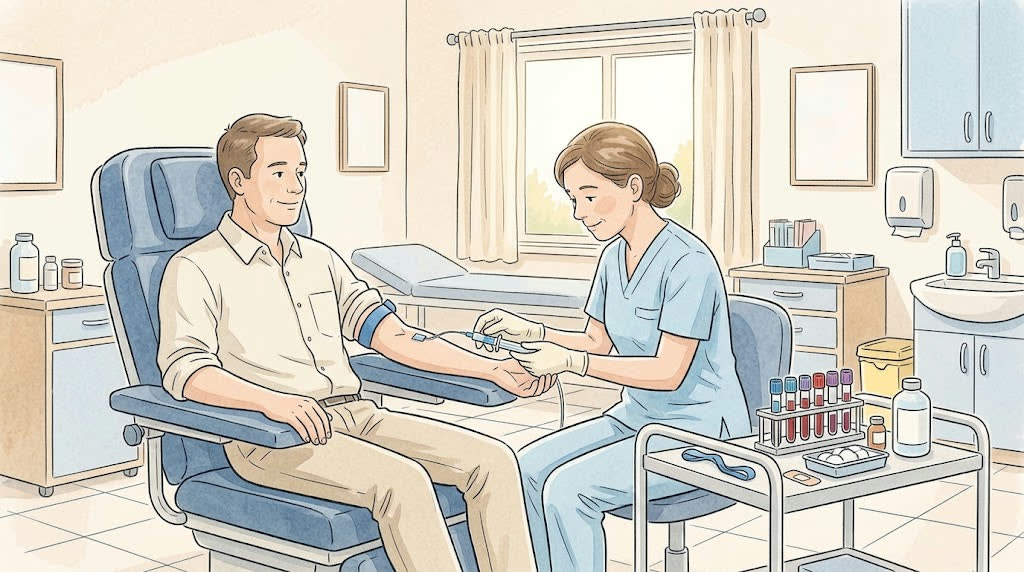
- You sit with your child. You can hold them on your lap
- The nurse wipes the skin on the arm with antiseptic
- A quick prick, and blood goes into a tube
- If needed, the parents give blood too
- The tubes are sent to a genetics lab
What you'll feel
- The prick is quick. Little ones often cry. Pick your child up right away
- Parents are often more anxious than the child. That is normal. Ask the geneticist questions
Afterwards
- Results usually come in several weeks
- A geneticist explains the result at a separate visit
- The test does not find a cause in every child. That does not mean there is nothing more to look for
- The data can be reviewed again later, as science learns more
Common questions
Why do the parents need to give blood?
It shows the lab which changes the child got from the parents and which are new. This helps find the cause.
What if nothing is found?
That happens. The doctor will decide if other tests or a later review of the data are needed.