
Coombs test and blood type in newborns
newborn Coombs test · direct antiglobulin test · DAT · baby's blood type · baby's Rh factor
Your newborn's blood type and Rh factor are checked, and the test looks for the mother's antibodies on the baby's red blood cells. These antibodies can break down the baby's blood.
If the mother has Rh-negative blood or blood type O, or if the baby gets jaundice or anemia early.
⏱ Duration: the blood draw takes a few minutes; results usually come within a day
Be sure to tell your doctor
How to prepare
- Preparation. None needed. Feed your baby as usual.
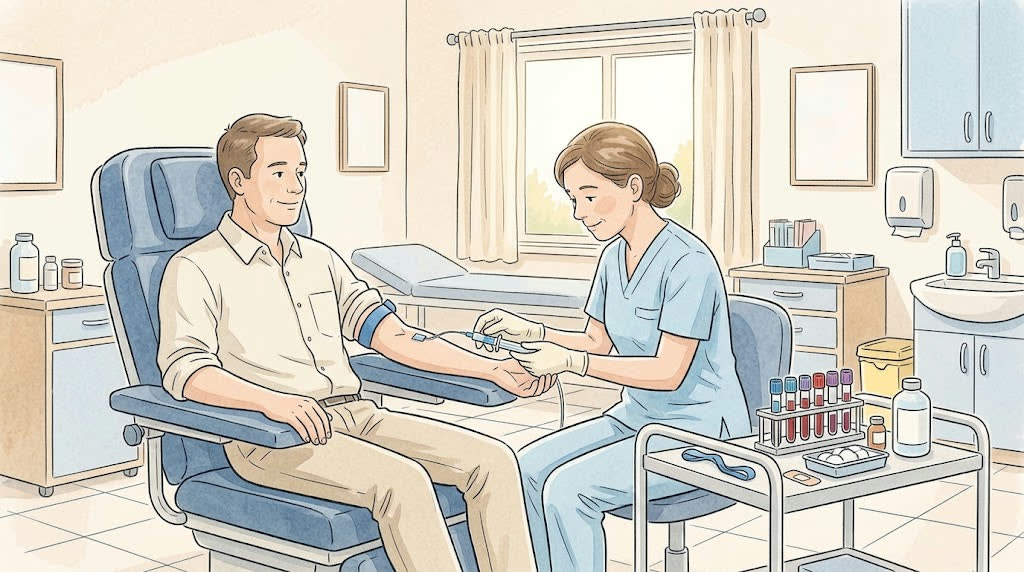
- How it is taken. Blood is often taken from the umbilical cord right after birth. Sometimes from the baby's heel or a vein.
- Documents. Keep your pregnancy record card and the mother's test results at hand.
What to bring
- The mother's pregnancy record card
- The mother's blood type and antibody results
How it goes
- If the sample is from the cord, it is taken right after birth. It does not hurt the baby
- If it is from the heel, the heel is warmed and wiped with antiseptic
- A tiny prick is made, and a few drops are collected
- A cotton pad is pressed on the spot
- The blood is sent to the lab
What you'll feel
- From the cord, the baby feels nothing
- From the heel or a vein, the baby cries briefly. Holding them close or feeding helps
Afterwards
- Results usually come within a day
- If the test is positive, the doctor checks bilirubin more often and watches for jaundice
- Sometimes the baby needs light therapy. The doctor will explain
Contact a doctor straight away if
- Jaundice is getting worse, and the skin is yellow down to the belly and legs: see a doctor right away
- The baby is floppy, feeds poorly, or is hard to wake: call emergency services
Common questions
Is a positive Coombs test dangerous?
It means the mother's antibodies are on the baby's blood. Often it passes with monitoring. The doctor keeps an eye on bilirubin.
Can I breastfeed?
Usually, yes. Frequent feeding helps the baby clear bilirubin faster. Ask your doctor.