
← All guides · Women's health and pregnancy
Postpartum depression screening
postpartum depression screening · postnatal depression test · Edinburgh scale · mood after birth
You answer a short questionnaire about your mood and how you feel. This helps spot postpartum depression in time.
Usually in the first weeks and months after birth. Sometimes during pregnancy too.
⏱ Duration: usually 5 to 10 minutes; the doctor discusses the result right away
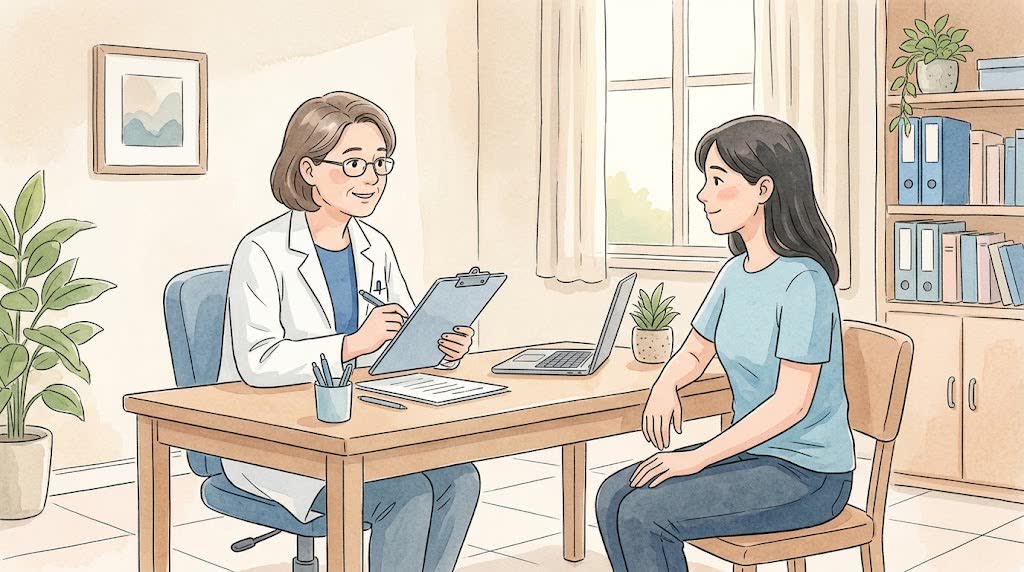
Be sure to tell your doctor
How to prepare
- Honesty. Answer as things really are. There are no right or wrong answers.
- Time. Answer about how you felt over the last 1 to 2 weeks.
- Support. You can come with someone close to you.
What to bring
- Your ID
- A list of your medicines
- You can bring your baby, if it is allowed
How it goes
- You get a questionnaire on paper or on a phone
- You answer about 10 questions
- The doctor adds up the score
- The doctor discusses the result with you
- If needed, help or a visit with a specialist is offered
What you'll feel
- The questions can be personal. This is normal
- It can be hard to admit things are difficult. The doctor will understand
Afterwards
- If the score is low, keep paying attention to how you feel
- If it is high, the doctor will offer support, counseling, or treatment
- Ask your family for help. Sleep and rest are very important
Contact a doctor straight away if
- Thoughts of harming yourself or your baby: call emergency services or see a doctor right away
- You cannot sleep, eat, or care for your baby for many days in a row
Common questions
Does this mean I am a bad mother?
No. Postpartum depression is common, and it can be treated.
How are the baby blues different from depression?
The baby blues usually pass in 1 to 2 weeks. If you feel bad for longer or more strongly, tell your doctor.