
Carrier screening before pregnancy
genetic carrier screening · preconception genetic test · couple genetic screening · carrier test
This test shows whether a person carries a hidden gene change that does not harm them but can be passed to a child. Usually both future parents take it.
When planning a pregnancy, if genetic conditions run in the family, if the partners are related, and with IVF.
⏱ Duration: the blood draw usually takes 5 minutes; results usually come in 2 to 4 weeks
Be sure to tell your doctor
How to prepare
- Counseling. It is best to talk with a geneticist ahead of time about which conditions the test covers.
- Food. You usually do not need to fast. Check with the lab.
- Your partner. Agree on who goes first, or do it together. That gets the couple an answer faster.
What to bring
- Your referral
- ID for both partners
- Information about conditions in both families
How it goes
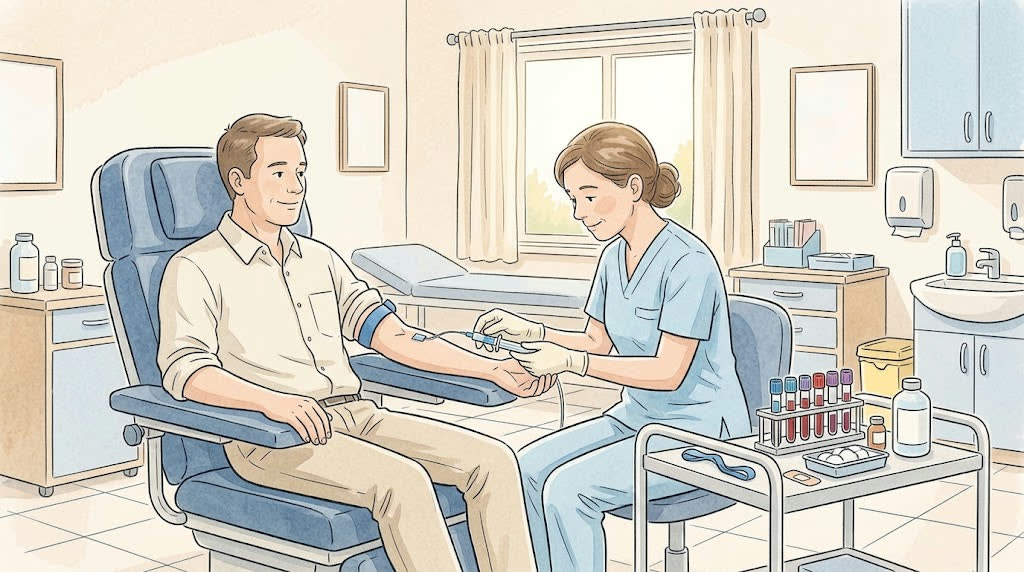
- You sit down and rest your arm on the armrest
- The skin is wiped with antiseptic
- Blood is taken from a vein. Sometimes saliva is collected instead
- Your partner does the same
- The samples are sent to a genetics lab
What you'll feel
- A quick prick, like a normal blood test
- Sometimes slight dizziness. Tell the nurse, and they will help you lie down
Afterwards
- Results usually come in 2 to 4 weeks
- Almost everyone carries some gene changes. This is normal
- There is a risk for the child when both partners carry a change in the same gene
- If that happens, a geneticist will explain your options
Common questions
If I am a carrier, am I sick?
No. A carrier is usually healthy. The change matters only for future children.
Is it enough if only one partner is tested?
Sometimes testing starts with one. But an accurate answer about the child's risk needs both results.