
Port flushing and care
port flush · port care · port maintenance · chemo port flushing
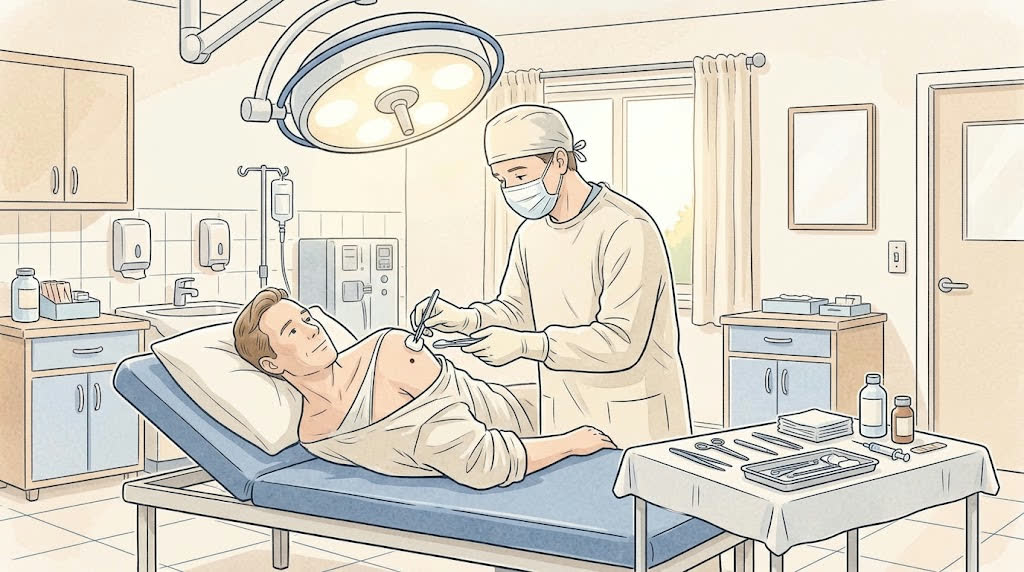
A nurse puts a special needle into the port and flushes it so no clots form inside.
Between chemotherapy courses when the port is not in use. Usually once every few weeks. The clinic will give you the schedule.
⏱ Duration: usually 10 to 20 minutes
Be sure to tell your doctor
How to prepare
- Schedule. Write down the date of the next flush. It must not be skipped.
- Pain relief. If the needle is uncomfortable, ask about numbing cream. It is put on beforehand.
- Clothing. Clothes that give easy access to your chest.
What to bring
- Your port card
- Your ID
- The date of your last flush
How it goes
- The nurse examines the area and cleans the skin over the port
- Feels for the port and inserts the special needle
- Checks that blood flows back and the port works
- Flushes the port with saline
- The needle is removed and the spot is covered with a plaster
What you'll feel
- A short prick through the skin
- A cool feeling from the fluid, sometimes a taste in the mouth
Afterwards
- You can take off the plaster after a few hours
- Usually you can go straight back to your normal activities
- Write down the date of the next flush
Contact a doctor straight away if
- Redness, pus or pain at the port site
- Fever or chills after the flush
- Swelling of the arm, neck or face
Common questions
How often does the port need to be flushed?
Usually once every few weeks when the port is not in use. The clinic will give the exact schedule.
What happens if I skip a flush?
The port can get blocked by a clot. Then it is harder to use, and sometimes it has to be replaced.