
Procedures
16
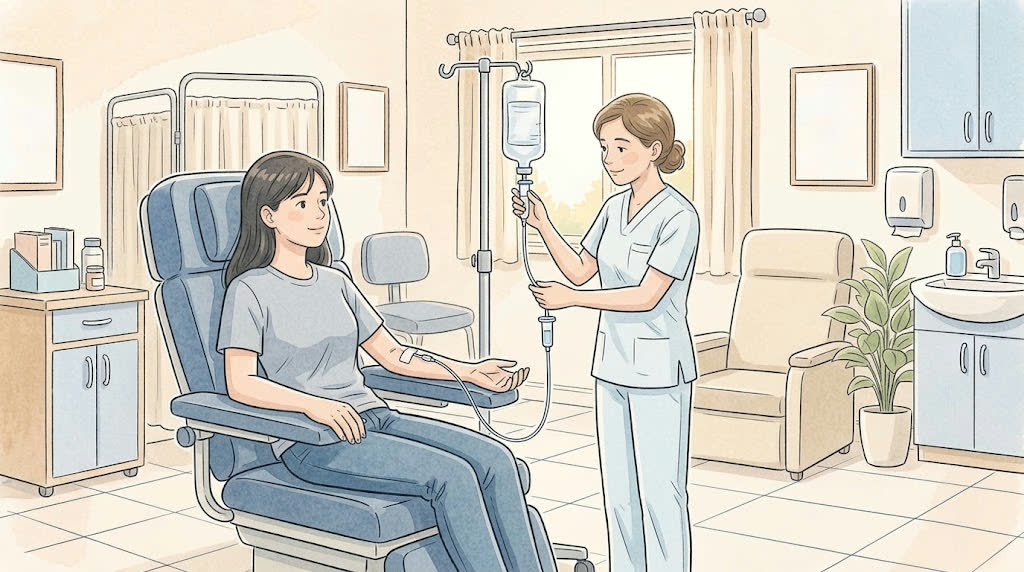
Intramuscular injectionMedicine is injected into a muscle with a syringe, usually in the buttock, thigh, or upper arm. From the muscle, it quickly gets into the blood.⏱ usually 2 to 5 minutesIV dripMedicine or fluid flows slowly into a vein through a thin tube. A nurse or a pump controls the speed.⏱ from 20 minutes to several hours, depending on the medicineIV cannula insertionA nurse puts a thin, soft tube into a vein. The needle is taken out right away, and only the plastic stays in the vein. Medicines and drips go through it without new injections.⏱ usually 2 to 5 minutesWound dressing changeA nurse or doctor takes off the old dressing, cleans the wound, and puts on a new one. This helps the wound heal cleaner and faster.⏱ usually 10 to 20 minutesStitch removalA doctor or nurse cuts and pulls out the threads or staples that closed your wound. It is usually quick and almost painless.⏱ usually 5 to 15 minutesWound cleaning and stitchesThe doctor cleans the wound, removes dirt and damaged tissue, and stitches it if needed, under local anesthesia.⏱ usually 15 to 40 minutesEarwax removalAn ENT doctor removes built-up earwax. The ear is rinsed with warm water, or the wax is taken out with a small tool.⏱ usually 10 to 20 minutesNose and sinus rinseAn ENT doctor rinses your nose and sinuses with a salt or medicated solution to clear out mucus and pus. No needles and no cuts.⏱ one session usually takes 10 to 15 minutes; a course is usually 5 to 10 sessionsThyroid needle biopsyUsing ultrasound to guide it, a thin needle takes cells from a thyroid lump, called a nodule, to see if it is harmless.⏱ usually 15 to 20 minutesBreast biopsyUsing ultrasound to guide it, the doctor takes tiny pieces of breast tissue with a thin needle. They are studied under a microscope.⏱ usually 20 to 40 minutes; taking the samples takes a few minutesJoint injectionThe doctor injects medicine right into the joint with a thin needle. Sometimes extra fluid is drained from the joint first.⏱ usually 10 to 20 minutesSkin biopsyUsing local numbing, the doctor takes a small piece of skin, or the whole growth, and sends it to be checked under a microscope.⏱ usually 15 to 30 minutesIUD insertionA gynecologist puts a small, flexible device into your womb to prevent pregnancy. There are copper IUDs and hormonal IUDs.⏱ the insertion itself usually takes 5 to 10 minutes; the whole visit about 30 minutesIUD removalA gynecologist takes the IUD out of the womb by pulling its strings. It is usually quick and done right in the exam room.⏱ the procedure itself takes 1 to 5 minutesUrinary catheter placementA thin, soft tube is passed through the urethra into the bladder so urine drains into a bag.⏱ placing it usually takes 5 to 10 minutes; the catheter stays in from a few hours to a few weeksEnemaWater or a solution is put into the rectum to clean out the bowel. It is simple and usually does not hurt.⏱ usually 10 to 20 minutes, including emptying your bowel