
Myocardial perfusion scan (heart scintigraphy)
heart scintigraphy · heart SPECT scan · radioisotope heart test · nuclear stress test
A very small dose of a special substance is injected into a vein and collects in the heart muscle. A camera shows how well blood feeds the heart at rest and under stress.
When coronary heart disease is suspected, for chest pain, and to check after a stent or bypass surgery.
⏱ Duration: usually 3 to 5 hours including waiting, sometimes over two days; the report usually in 1 to 3 days
Be sure to tell your doctor
How to prepare
- Caffeine. Usually no coffee, tea, cola, energy drinks or chocolate for a day before. The clinic will tell you the exact time.
- Food. Usually no food for 3 to 4 hours before the exam. Ask the clinic.
- Medicines. Do not stop them on your own. Your doctor may ask you to skip some heart medicines - only on their instruction.
- Clothing. Comfortable clothes and walking shoes, with no metal.
What to bring
- Your referral
- Your ID
- A list of your medicines
- Earlier ECGs and heart reports
- A snack for the break between scans
How it goes
- A thin catheter is placed in your vein and ECG electrodes are stuck on
- A small dose of the substance is given and you wait for it to collect
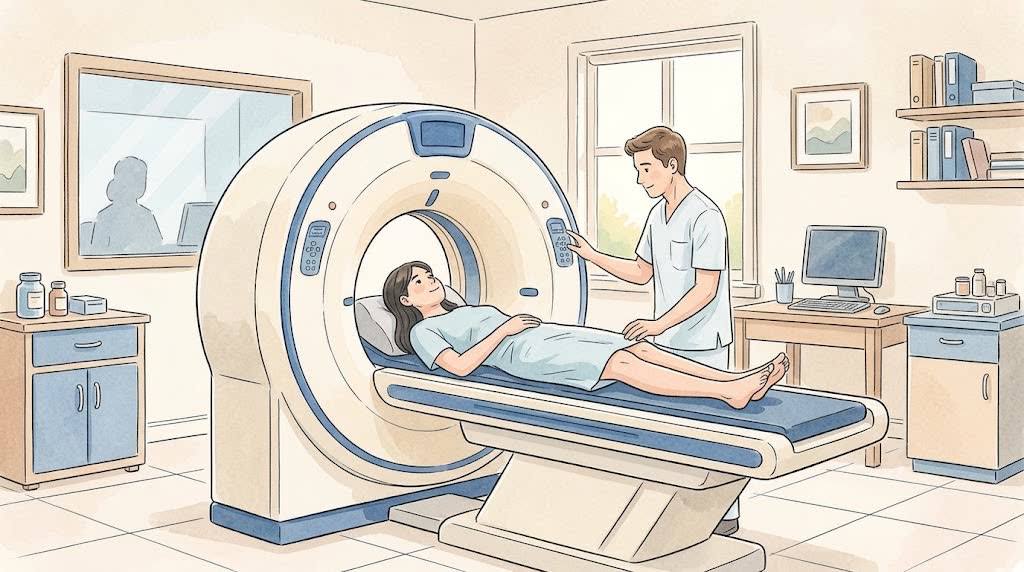
- You lie under the camera with your arms above your head while it slowly moves around your chest
- For the second part, a stress test is done: treadmill, exercise bike or a medicine that imitates exercise
- At peak stress the substance is given again
- After a break, another series of pictures is taken
What you'll feel
- A prick when the catheter goes in
- During stress - shortness of breath and a fast heartbeat, which is expected
- The stress medicine can cause a hot flush, headache and heaviness in the chest - usually gone within minutes
- Under the camera you must lie still, which can be tiring
Afterwards
- Drink more water for the rest of the day - the substance will leave faster
- You can usually go back to normal food and activities right away
- In the evening limit long close contact with pregnant women and small children - ask your doctor
- The report usually comes in 1 to 3 days and is discussed with your cardiologist
Contact a doctor straight away if
- Severe pressing chest pain that does not go away - call your local emergency number
- Sudden shortness of breath, fainting or a strong heartbeat after the exam
Common questions
Is this dangerous radiation?
The dose is small and is considered safe for this exam. If you are pregnant or breastfeeding, be sure to say so in advance.
Why no coffee before the exam?
Caffeine stops the stress medicine from working. The result may then be inaccurate.