
← All services · X-ray, CT, MRI
Brain MRI
head MRI · MRI of the brain · brain scan · MRI head scan
Pictures of the brain taken in a magnetic field. There is no X-ray radiation. Sometimes contrast is given into a vein.
For frequent headaches, dizziness, seizures, memory or vision problems, after a head injury, and to follow a known condition.
⏱ Duration: usually 20 to 40 minutes, longer with contrast
Be sure to tell your doctor
How to prepare
- Metal. At home, take off jewelry, piercings, and your watch. No metal is allowed in the scan room.
- Clothes. Wear comfortable clothes with no metal: no zips, snaps, or underwire. You are often given a disposable gown.
- Makeup. Do not wear mascara or glittery eye shadow. They can contain tiny bits of metal.
- Food. Usually no special prep is needed. If contrast is planned, ask the clinic if you should not eat for 2 to 4 hours.
What to bring
- Your referral
- Past MRI or CT scans and reports
- Documents for any implants you have
How it goes
- You leave your phone, keys, cards, and anything metal in a locker
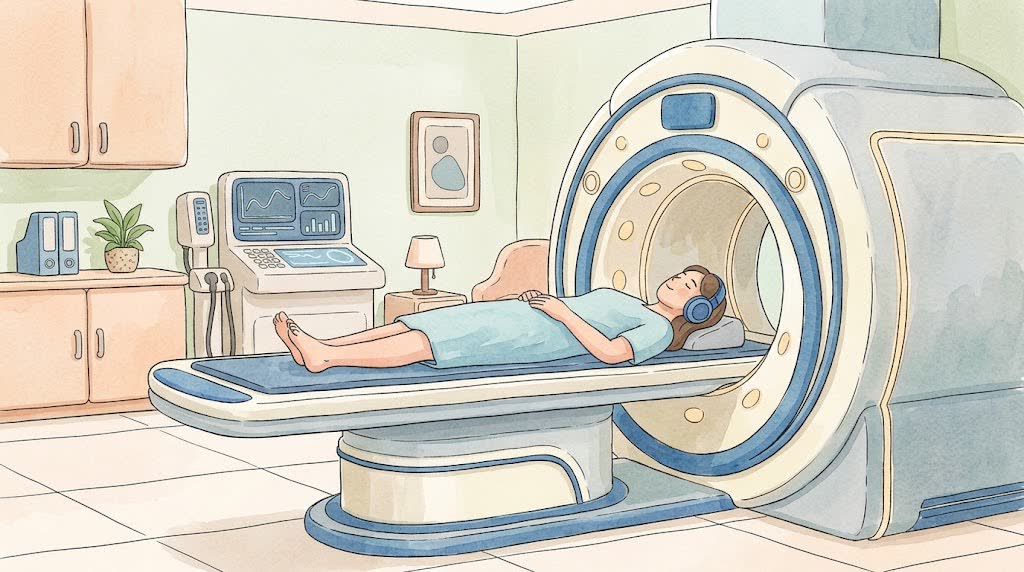
- You lie on the scanner table and get headphones or earplugs. The machine is noisy
- Your head is placed in a coil. It looks like a helmet with a window
- The table slides into the scanner tunnel
- Lie still. The staff can talk to you over a speaker
- You hold a call button. You can press it at any time
- If contrast is needed, it is given into a vein during the scan
What you'll feel
- Loud knocking and humming. This is normal
- Sometimes slight warmth in the part of the body being scanned
- If contrast is given, a cool feeling in the vein. It passes quickly
Afterwards
- You can go back to your day straight away
- The report is usually ready the same day or in 1 to 2 days
- If you had contrast, drink more water that day, unless your doctor said not to
Contact a doctor straight away if
- After contrast: a rash, a swollen face, or trouble breathing. Tell the staff right away or call emergency services
Common questions
Can I have an MRI if I have metal in my body?
Often yes, but the doctor decides. Tell them about any implant in advance and bring its documents.
What if I am afraid of closed spaces?
Say so when you book. An open scanner, an eye mask, or music can help. Sometimes the doctor gives a calming medicine.
Is an MRI harmful?
There is no radiation. For most people, MRI is safe. The key is to tell the doctor honestly about any metal and implants.