
← All guides · Heart, lungs and nerves tests
Cardiopulmonary exercise test
CPET · CPX test · cardiopulmonary exercise testing · exercise test with gas analysis · ergospirometry
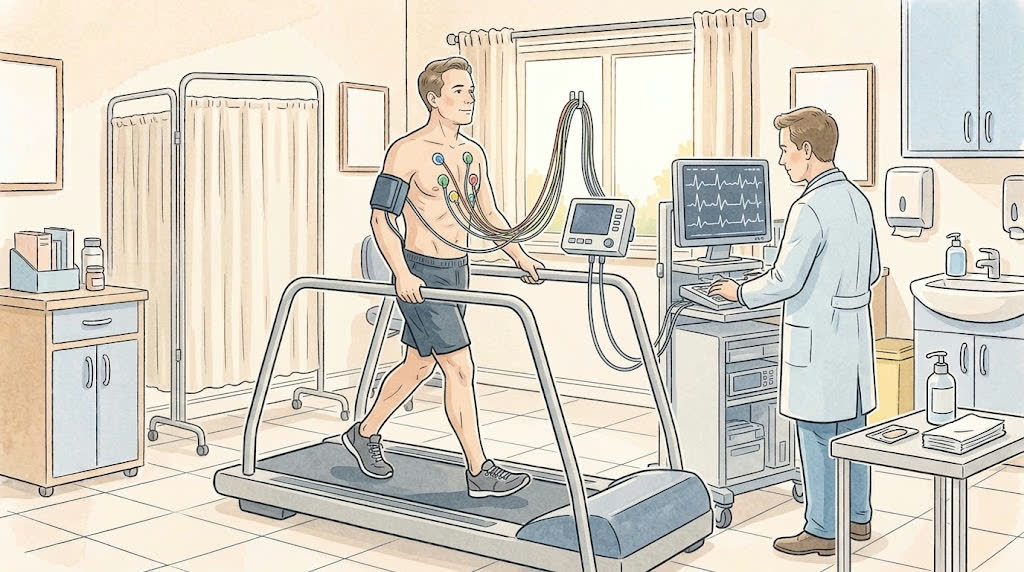
You pedal a bike or walk on a treadmill while wearing a mask. The equipment checks how your heart works and how much oxygen you use.
When the cause of shortness of breath is unclear, before surgery, for heart and lung conditions, or to find a safe level of exercise.
⏱ Duration: usually 45 to 60 minutes including setup; the exercise itself takes 8 to 12 minutes
Be sure to tell your doctor
How to prepare
- Food. A light meal 2 to 3 hours before the test. Do not come hungry, and do not eat a big meal.
- The day before. No hard workouts or alcohol. On the day of the test, you usually skip coffee and do not smoke. Check with the clinic.
- Clothing. Sportswear and comfortable shoes.
- Medicines. Do not stop anything on your own. If your doctor gives you a plan, follow it.
What to bring
- Your referral
- A list of your medicines
- Sportswear and shoes
- Water and a towel
How it goes
- ECG stickers are put on your chest and a blood pressure cuff on your arm
- A mask is put on your face. You breathe through it
- First, readings are taken at rest
- You start pedaling or walking, and the effort slowly goes up
- You keep going until you are tired or the doctor stops you
- After the test, you rest until your pulse settles
What you'll feel
- The mask feels strange at first
- By the end, you feel very tired and out of breath, like after a hard workout
- Your legs may still be sore the next day
Afterwards
- Sit for 10 to 15 minutes before you leave
- Reading the results usually takes from a few hours to a few days
- Avoid heavy exercise for the rest of the day
Contact a doctor straight away if
- Chest pain, dizziness, or not getting enough air during the test: tell the doctor right away
- Chest pain or fainting after the test: call emergency services
Common questions
Why go to my limit?
To see how your heart and lungs work at their maximum. But you will be stopped if it becomes unsafe.
How is this different from a normal treadmill test?
Besides the ECG, it measures your breathing and gas exchange. This helps show what limits you: the heart, the lungs, or the muscles.