
Fetal biophysical profile
BPP · biophysical profile · fetal well-being ultrasound
On ultrasound, the doctor checks how your baby breathes, moves, and holds muscle tone, and how much amniotic fluid there is. A heart rate trace, called CTG, is often done too.
Usually in the third trimester, when the baby's well-being needs checking, for example if you are past your due date or the baby is moving less.
⏱ Duration: usually 30 to 40 minutes; the result is given right away
Be sure to tell your doctor
How to prepare
- Food. It is better to eat before the scan. A hungry baby can be sluggish. Check with the clinic.
- Time. Watching can take up to half an hour, because the baby may be asleep. Be patient.
What to bring
- Your pregnancy record card
- Past ultrasound and CTG results
- Water
How it goes
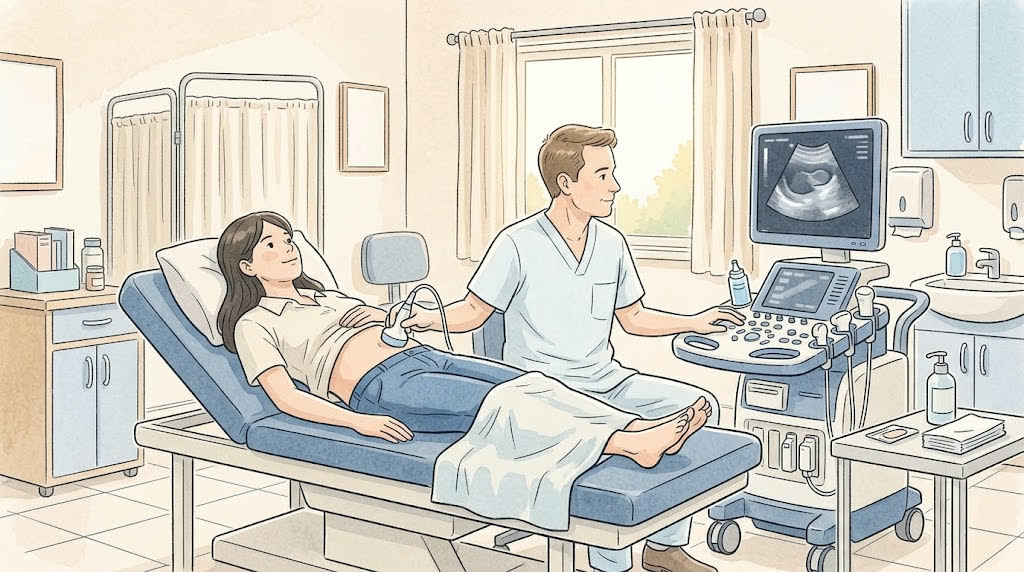
- You lie on the exam table, and gel is put on your belly
- The doctor watches the baby on ultrasound
- The doctor looks for breathing movements and movements of the body and arms
- The amount of amniotic fluid is measured
- If ordered, CTG sensors are put on your belly to record the baby's heartbeat
What you'll feel
- It does not hurt
- Lying on your back can be uncomfortable. You can ask to turn on your side
Afterwards
- The doctor tells you the score right away
- If the score is low, the test may be repeated or the timing of birth discussed. Your doctor decides
- At home, keep track of your baby's movements
Contact a doctor straight away if
- The baby has almost stopped moving: go to the maternity hospital right away
- Leaking fluid or bleeding: call emergency services
- Severe belly pain or regular contractions
Common questions
Why wasn't the baby moving on the ultrasound?
The baby may have been asleep. Usually the doctor just waits or asks you to change position.
What does 8 out of 10 mean?
Usually it is a good result. Your doctor will explain it for your situation.