
Prostate ultrasound
TRUS · transrectal ultrasound · prostate ultrasound
An ultrasound check of the prostate gland. Most often the probe is placed in the rectum. This gives the best view of the prostate. Sometimes it is checked through the belly.
For frequent or difficult peeing, pain between the legs, a high PSA, infertility, or to keep watch on the prostate.
⏱ Duration: usually 10 to 20 minutes
Be sure to tell your doctor
How to prepare
- Bowel. Usually a small cleansing enema is done the evening before, or 1 to 2 hours before in the morning. Your clinic will tell you how.
- Bladder. You are often asked to come with a fairly full bladder: drink about 1 liter of water over an hour and do not pee. Check with your clinic.
- Food. You can eat. The day before, it is best to avoid foods that cause gas: cabbage, beans, and fizzy drinks.
What to bring
- Your referral
- Your PSA result, if you had the test
- Past ultrasound reports
How it goes
- You undress below the waist and lie on your left side with your knees to your chest
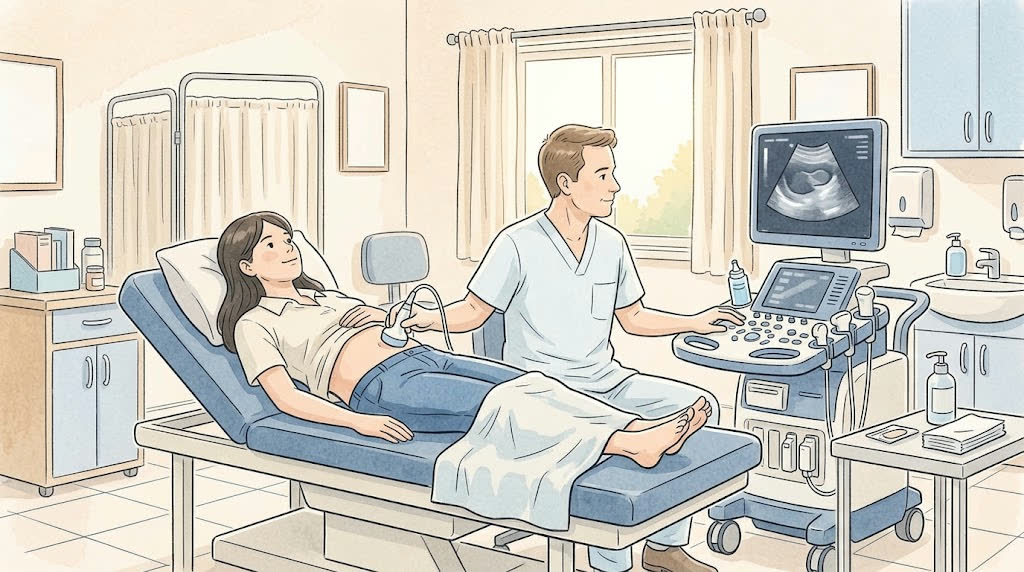
- If your belly is checked too, the probe is first moved over your belly with gel
- The doctor puts a cover on the thin probe and coats it with gel
- The probe is gently put a few centimeters into the rectum
- Lie still and breathe evenly
- Sometimes you are asked to pee, and the doctor checks how much urine is left in the bladder
What you'll feel
- Pressure and an urge to go to the toilet. This is normal and passes quickly
- It should not hurt. If it is uncomfortable, tell the doctor, and they will be more gentle
Afterwards
- You can go back to your day right away
- You usually get the report right away
- Talk about the result with your urologist
Common questions
Does a transrectal ultrasound hurt?
Usually not. The probe is thin and well coated with gel. You feel pressure, but not pain.
Why use a probe in the rectum when there is a belly ultrasound?
The prostate sits right behind the bowel wall. This way the doctor sees it closer and more clearly than through the belly and bladder.