
Earwax removal
earwax removal · ear cleaning · ear irrigation · blocked ear
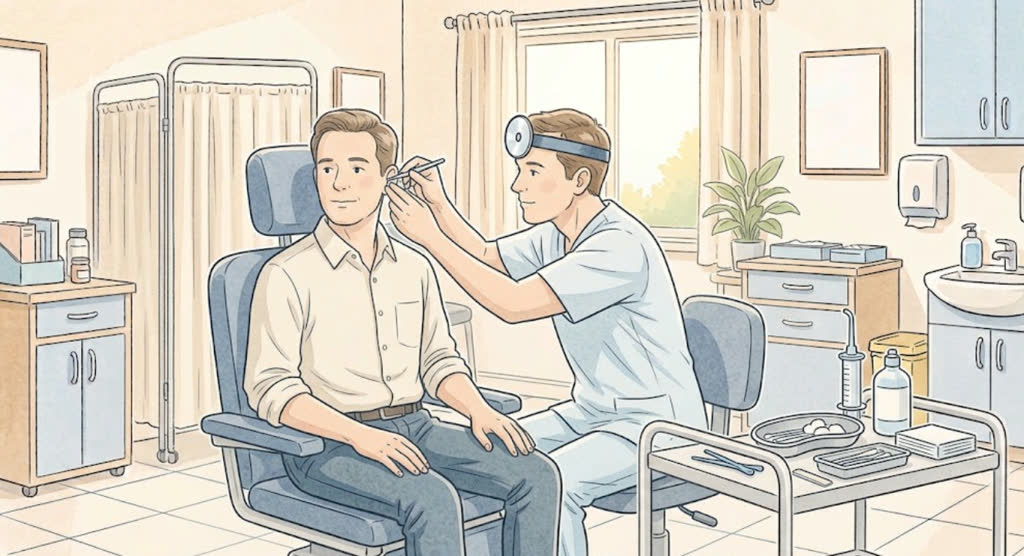
An ENT doctor removes built-up earwax. The ear is rinsed with warm water, or the wax is taken out with a small tool.
When your ear feels blocked, your hearing drops, or it feels muffled after swimming, and the doctor sees a wax plug.
⏱ Duration: usually 10 to 20 minutes
Be sure to tell your doctor
How to prepare
- Softening. Sometimes the doctor asks you to use ear drops for a few days to soften the wax. Do only what the doctor said.
- Hands off. Do not use cotton swabs in your ear. They push the wax deeper.
What to bring
- Your referral, if you have one
- Your hearing aid, if you wear one
How it goes
- The doctor looks into your ear with a small funnel or a camera
- If the eardrum is intact, the ear is rinsed with warm water from a syringe with no needle
- The water and wax drain into a small tray held at your neck
- Sometimes the wax is removed with a tool or gentle suction
- The doctor looks again and checks your eardrum
What you'll feel
- Warm water in your ear, with noise and gurgling
- You may feel a little dizzy. Tell the doctor
- Right after, your hearing usually comes back
Afterwards
- You can wipe the outside of your ear, but do not put swabs inside
- If this happens often, ask your doctor how to prevent wax plugs
Contact a doctor straight away if
- Severe ear pain, or blood or pus from the ear after the procedure
- Sudden hearing loss or severe dizziness
Common questions
Can I remove earwax at home?
Do not use swabs or hairpins. You can damage your eardrum. If your ear feels blocked, see an ENT doctor.
Does ear rinsing hurt?
Usually not. It feels warm, noisy, and a bit strange.