
Wound dressing change
dressing change · wound care · changing a bandage · dressing after surgery
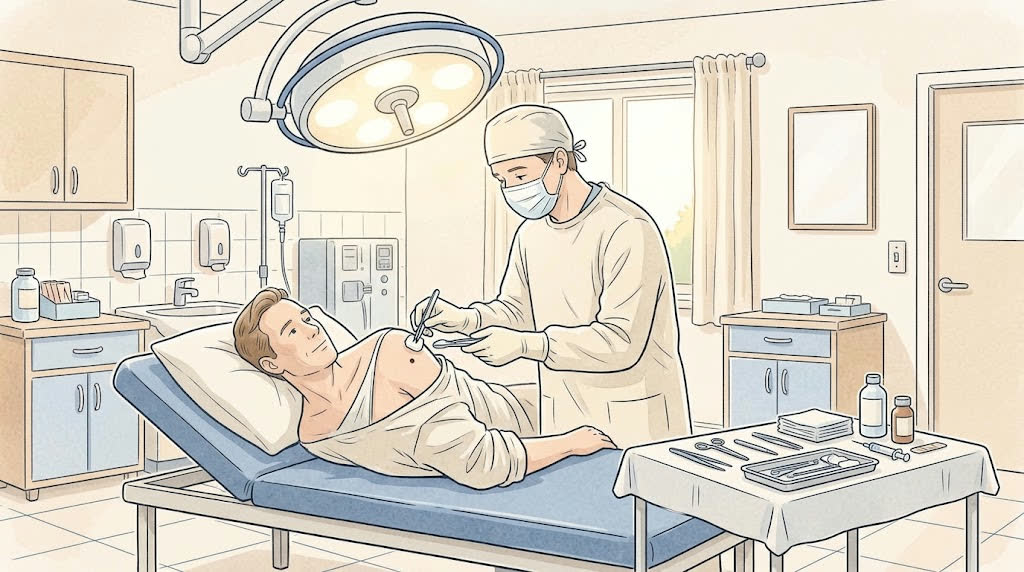
A nurse or doctor takes off the old dressing, cleans the wound, and puts on a new one. This helps the wound heal cleaner and faster.
After surgery, and for cuts, burns, scrapes, stitches, and other wounds.
⏱ Duration: usually 10 to 20 minutes
Be sure to tell your doctor
How to prepare
- Dressing. Do not take the dressing off yourself unless your doctor said you can. Keep it dry.
- Pain. If dressing changes usually hurt, ask your doctor ahead of time about pain relief.
- Clothes. Wear loose clothes so the wound is easy to reach.
What to bring
- Your discharge papers or your doctor's orders
- Your own dressing supplies, if you were asked to bring them
How it goes
- You sit or lie down so the wound is easy to reach
- The old dressing is gently removed. If it is stuck, it is soaked with a solution first
- The nurse or doctor checks the wound
- The wound and the skin around it are cleaned with antiseptic
- A new sterile dressing is put on and secured
What you'll feel
- The antiseptic may sting a little
- Removing a stuck dressing can be unpleasant. Say so if it hurts
Afterwards
- Keep the dressing clean and dry
- The next change depends on how the wound looks, often in 1 to 3 days
- Before you shower, ask if the dressing can get wet
Contact a doctor straight away if
- The dressing quickly soaks through with blood
- The wound is red, swollen, or hot, or has pus or a bad smell
- A fever above 38 degrees Celsius
Common questions
How often should a dressing be changed?
It varies, from every day to once every few days. The doctor will tell you after looking at the wound.
Can I change my dressing at home?
Simple dressings are often changed at home once the doctor shows you how. Complex wounds are best done at the clinic.