
Ear, nose and throat
20
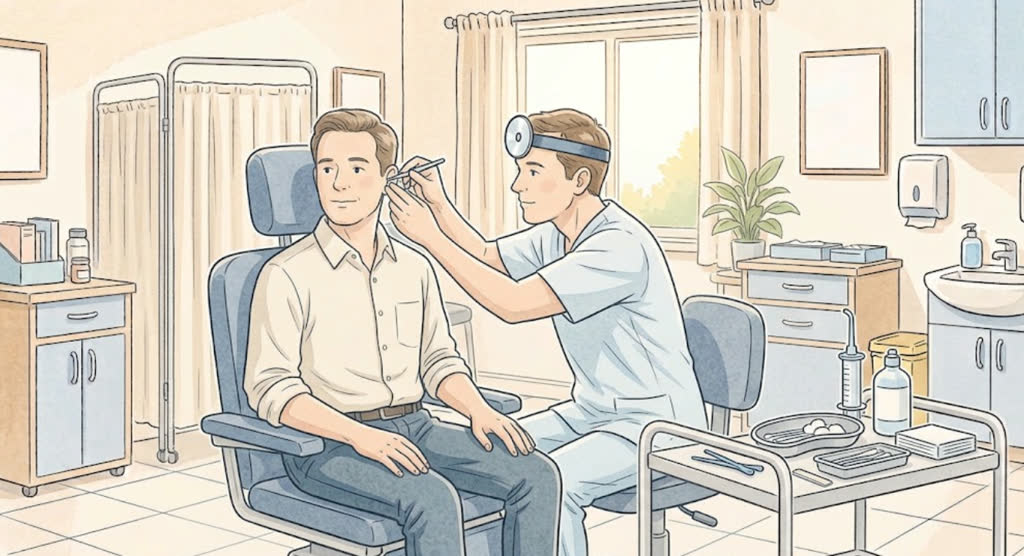
Hearing test (audiometry)You wear headphones, listen to quiet sounds of different pitches, and give a sign when you hear them. This makes a chart of your hearing.⏱ usually 15 to 30 minutesTympanometryA short test: a soft tip is placed in your ear and the air pressure is changed slightly. A machine checks how your eardrum moves.⏱ usually 2 to 5 minutes for both earsENT doctor visitAn ENT doctor examines your ears, nose, and throat. Many problems can be seen right away and treated on the spot.⏱ usually 15 to 30 minutesChildren's ENT checkupAn ENT doctor examines your child's ears, nose, and throat. The exam is usually short and does not hurt.⏱ usually 15 to 30 minutesEardrum puncture (myringotomy)The doctor makes a tiny opening in the eardrum. Pus or fluid drains out of the ear through it.⏱ the procedure itself usually takes a few minutesTonsil flushingThe doctor flushes your tonsils with a medicated solution. This washes out tonsil stones and pus.⏱ usually 10 to 15 minutes; often a course of several sessions is givenNosebleed treatmentThe doctor finds where the blood is coming from and stops it. Sometimes the vessel is sealed with cautery, or the nose is packed.⏱ usually 15 to 30 minutes; if the nose is packed, the packing usually comes out after 1 to 2 daysRadiofrequency turbinate reductionUsing a thin probe, the doctor shrinks swollen turbinates inside your nose from within. The lining on top stays intact, and your nose breathes more freely.⏱ the procedure usually takes 15 to 30 minutes, and you go home the same day; the effect shows in 2 to 4 weeksHearing aid fittingA specialist tests your hearing, chooses a hearing aid, and sets it up for your ears. The aid makes sounds louder and speech clearer.⏱ the first visit usually takes 1 to 1.5 hours; getting used to it and fine-tuning takes a few weeksNewborn hearing screeningA quick hearing test for your baby. A soft tip goes into the ear, the device plays quiet sounds and records the ear's response.⏱ usually 5 to 10 minutes; the result is ready right awayDizziness and balance testingThe doctor works out why you feel dizzy. Your eyes, balance, and body position are checked, and sometimes eye movements are recorded with special goggles.⏱ usually 30 to 60 minutes; the doctor can tell you part of the answer right awaySnoring treatmentThe doctor finds where the airflow is blocked in your throat and nose and suggests treatment. Often it is a small procedure on the soft palate or in the nose, with local numbing.⏱ the exam usually takes 30 minutes; a procedure usually takes 20 to 40 minutes, and you go home the same dayRemoving objects from a child's ear or noseAn ENT doctor (ear, nose, and throat doctor) gently removes the object from your child's ear or nose with a special tool.⏱ usually 5 to 20 minutesEar tube inflationThe doctor blows air into the ear tubes, the channels that connect the nose and the ear. This helps even out the pressure in the ear.⏱ usually 5 to 15 minutes; a course is several sessionsMaxillary sinus punctureThe doctor makes a small hole with a thin needle through the nose into the sinus and rinses it. This lets the pus out.⏱ usually 10 to 20 minutesEar infection in a child: treatment and follow-upThe doctor checks your child's ear and decides how to treat the infection. Often this means pain relief and watching, and sometimes antibiotics.⏱ the visit usually takes 15 to 30 minutes; an ear infection usually goes away in a few daysVisit for ringing in the earsAn ENT doctor finds out where the noise in your ears comes from and checks your hearing. Then they choose treatment or ways to make the noise bother you less.⏱ the visit usually takes 30 to 60 minutes; a hearing test takes about 20 minutesEpley maneuver for positional vertigoThe doctor turns your head and body in a set order. This moves tiny particles in the inner ear back into place, and the dizziness goes away.⏱ usually 10 to 15 minutes; relief often comes right away or within a few daysVoice doctor visit (phoniatrist)This is an ENT doctor who treats voice problems. They listen to how you speak and check your vocal cords with a mirror or a thin camera.⏱ usually 20 to 40 minutes; the doctor tells you the findings during the visitSmell testYou are asked to sniff different smells and name them or tell them apart. This shows the doctor how well you can smell.⏱ usually 15 to 30 minutes; the doctor tells you the findings during the visit