
← All services · Ear, nose and throat
Nosebleed treatment
nosebleed · epistaxis · nasal cautery · nasal packing
The doctor finds where the blood is coming from and stops it. Sometimes the vessel is sealed with cautery, or the nose is packed.
When a nosebleed will not stop on its own or keeps coming back.
⏱ Duration: usually 15 to 30 minutes; if the nose is packed, the packing usually comes out after 1 to 2 days
Be sure to tell your doctor
How to prepare
- Right now. Sit up and lean your head forward, not back. Pinch the soft part of your nose firmly for 10 to 15 minutes.
- What not to do. Do not tilt your head back or swallow the blood.
- Medicines. If you take blood thinners, tell your doctor. Do not stop them on your own.
What to bring
- Your ID
- A list of your medicines
- Tissues
How it goes
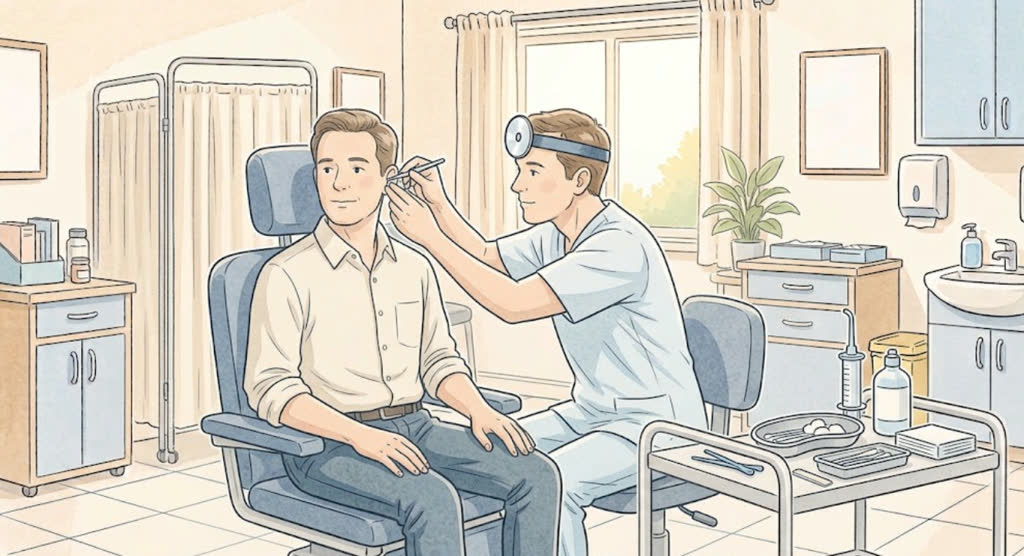
- The doctor clears clots from your nose
- The lining is numbed with a spray or cotton pads
- The bleeding vessel is found
- It is sealed with cautery, or the nose is packed
- Sometimes your blood pressure is checked
- You are told what to do at home
What you'll feel
- Unpleasant, may sting
- Packing makes it hard to breathe through your nose and makes your eyes water
Afterwards
- Do not blow or pick your nose for a few days
- No heavy lifting or hot drinks in the first days
- If your nose is packed, it will be removed at the clinic
- Keep the air moist at home
Contact a doctor straight away if
- Bleeding will not stop after 20 minutes, or is heavy: call emergency services
- Weakness, dizziness, or paleness
- A nosebleed after a head injury: call emergency services
Common questions
Why not tilt my head back?
Blood runs into your throat, you swallow it, and you may vomit.
Why do I get nosebleeds often?
Often from dry air and fragile vessels. Your doctor will find the cause.