
Voiding cystourethrogram in a child
VCUG · cystogram · bladder X-ray for a child · reflux test
Contrast is put into the bladder through a thin catheter, and X-rays are taken while your child pees. This shows whether urine flows back up to the kidneys.
Usually after urinary tract infections with fever, or if an ultrasound showed widened kidneys.
⏱ Duration: usually 30 to 60 minutes, with the result the same day
Be sure to tell your doctor
How to prepare
- Urine test. A fresh urine test showing no infection is often needed before the exam. Ask the clinic.
- Antibiotic. Sometimes the doctor prescribes an antibiotic as a precaution. The doctor will give the plan.
- Talk. Calmly explain to your child what will happen. You can bring a favorite toy.
- Food. Usually your child can eat as normal.
What to bring
- The referral and urine test
- A change of underwear and a diaper
- A toy, or a cartoon on your phone
- Your child's documents
How it goes
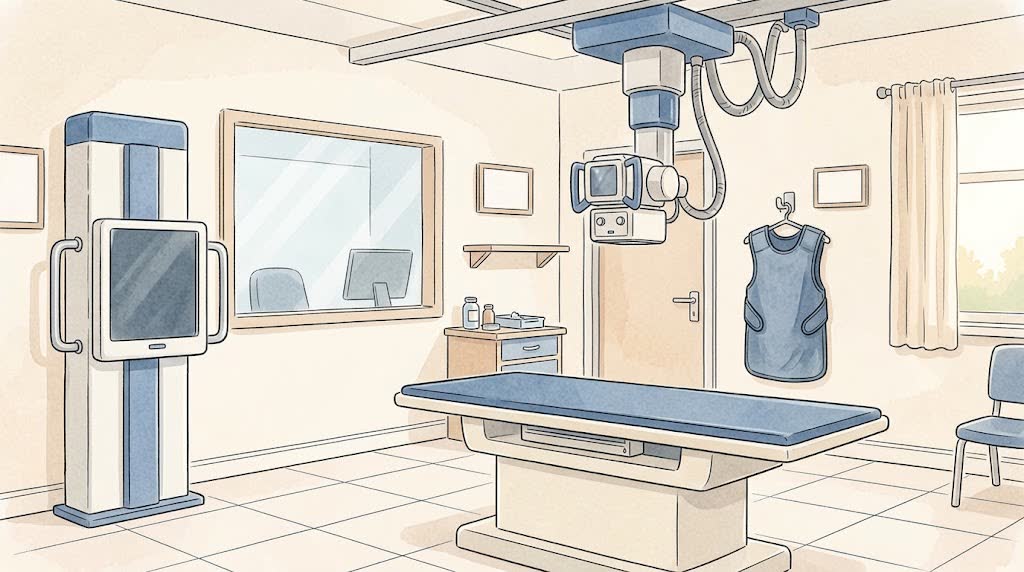
- Your child lies on the X-ray table
- The genital area is wiped with antiseptic
- A thin catheter with gel is passed through the urinary channel
- The bladder is slowly filled with contrast through the catheter
- Pictures are taken, then your child is asked to pee, and more are taken
- The catheter is removed
What you'll feel
- Placing the catheter is unpleasant and your child may cry
- A strong urge to go to the toilet
- Peeing while lying on the table can feel strange and awkward
Afterwards
- Have your child drink more today
- The first 1 or 2 times it may sting a little to pee
- The report is usually the same day, and the doctor makes the decision
Contact a doctor straight away if
- Fever above 38
- Severe pain when peeing, or your child cannot pee
- Blood in the urine for more than a day
Common questions
Can I stay with my child?
Usually one parent can stay. You will be given a protective apron.
Why pee on the table?
Backflow of urine is often seen exactly during peeing.