
Excretory urography (kidney X-ray with contrast)
IV urography · excretory urography · kidney X-ray with contrast · IVP
A contrast dye is given into a vein and several X-rays are taken. They show how the kidneys pass urine and how it flows through the urinary tract.
For stones, lower back pain, blood in the urine and kidney abnormalities, when the doctor chooses this method.
⏱ Duration: usually 30 to 60 minutes, sometimes longer; the report is ready the same day
Be sure to tell your doctor
How to prepare
- Test. A blood test for creatinine is often needed before the exam. Ask the clinic.
- Bowel. Sometimes you are advised to have a light dinner the evening before and avoid foods that cause gas.
- Food. Usually no food in the morning. The clinic will tell you the exact time.
- Medicines. Do not stop them on your own. If you take diabetes medicines, ask your doctor in advance.
What to bring
- Your referral
- The creatinine test result
- Earlier scans and ultrasounds
- Your ID
How it goes
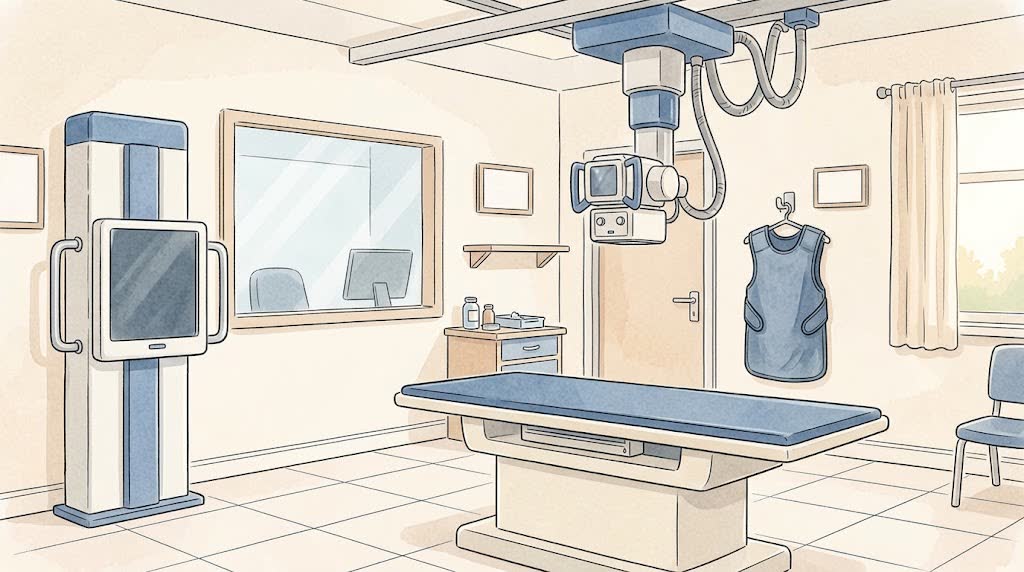
- You lie down on the X-ray table
- A first picture is taken without contrast
- Contrast is given into a vein
- After a few minutes a series of pictures is taken
- Sometimes you are asked to use the toilet and one more picture is taken
What you'll feel
- When the contrast goes in - warmth through your body and a metallic taste in your mouth
- Sometimes it feels like you need the toilet - this is the feeling from the contrast
Afterwards
- Drink more water that day, unless your doctor limited you
- The report is usually ready the same day
- Discuss the result with your urologist
Contact a doctor straight away if
- Rash, itching, swelling of the face or trouble breathing - tell staff right away; at home, call your local emergency number
- Pain or swelling at the injection site
- Much less urine than usual
Common questions
How is this different from a kidney CT?
It is an X-ray with contrast. A CT is often done now, but sometimes the doctor chooses urography.
What if I am allergic to iodine?
Be sure to tell the doctor in advance. They will decide whether it can be done and whether preparation is needed.