
Epstein-Barr virus (mono)
EBV test · Epstein-Barr antibodies · mono test · mononucleosis test · glandular fever test
This blood test looks for antibodies to the Epstein-Barr virus. It helps show whether you have mono now or had it before.
For a long fever, a very sore throat, swollen glands in the neck, and weakness. It is common in children and teenagers.
⏱ Duration: the blood draw takes a few minutes; results usually come in 1 to 3 days
Be sure to tell your doctor
How to prepare
- Food. You usually do not need to fast strictly, but it is better to come 3 to 4 hours after a light, non-fatty meal. Check with the lab.
- Medicines. Do not stop anything on your own. Tell your doctor what you take. They will decide if anything needs to change before the test.
- Your child. If a child is being tested, tell them there will be a quick prick. Bring water and a snack for afterward.
- Clothing. A sleeve you can easily roll up above the elbow.
What to bring
- Your referral or list of tests
- Your ID
- Your complete blood count, if you already had one
How it goes
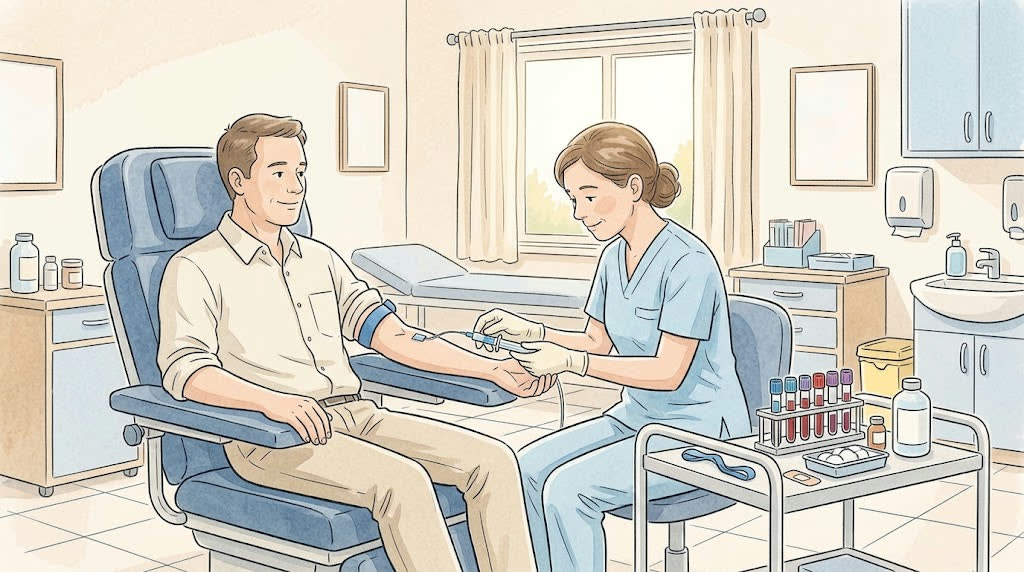
- You sit down and rest your arm on the armrest
- A band is tied above your elbow, and you are asked to clench your fist a few times
- The skin is wiped with antiseptic
- A quick prick. Blood fills the tubes in a few seconds
- The needle comes out, and a cotton pad is pressed on the spot
What you'll feel
- A quick prick, like a pinch
- Sometimes slight dizziness. Tell the nurse, and they will help you lie down
- A child may get scared. Stay close and hold their hand
Afterwards
- Press the cotton pad for 3 to 5 minutes
- Until your doctor says otherwise: no sports or rough play. Mono makes the spleen bigger
- Your doctor will explain the result. Usually several types of antibodies are checked
Contact a doctor straight away if
- Sudden pain on the left side of the belly, weakness, or paleness: call emergency services
- Trouble breathing or swallowing: call emergency services
- Fever lasting more than a week: tell your doctor
Common questions
How does Epstein-Barr virus spread?
Mostly through saliva: kissing, shared cups, and toys. Most people get it in childhood.
Why no sports?
With mono, the spleen is enlarged and can be injured by a hit. Your doctor will say when you can go back to sports.