
Chemotherapy: how a course goes
chemo · chemotherapy · chemotherapy infusion · chemo drip · chemotherapy course
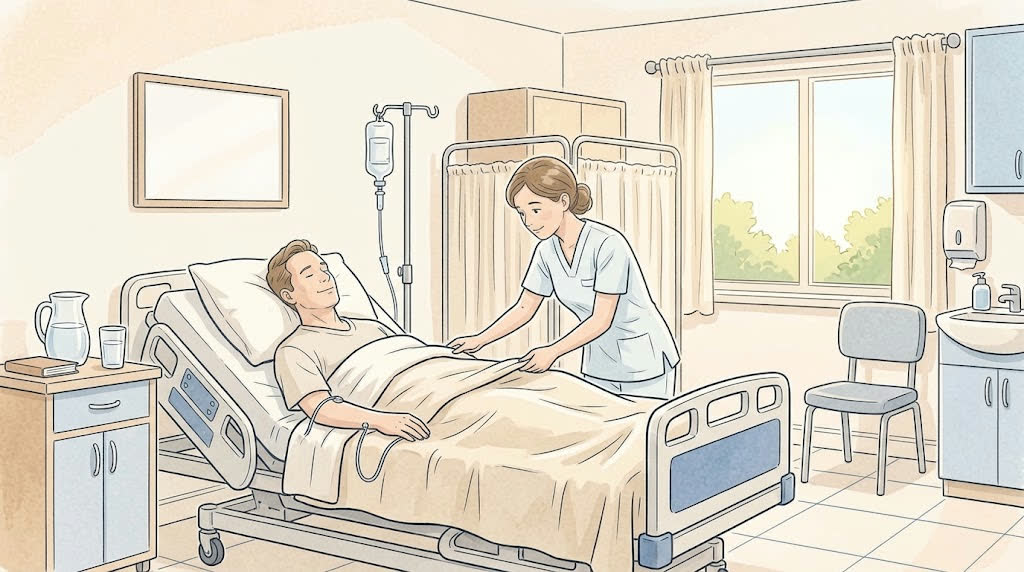
Medicines against a tumor are given into a vein through a drip. The course runs in cycles: treatment days and rest days.
For cancer, as decided by your oncologist.
⏱ Duration: one infusion takes from 30 minutes to several hours; a course lasts several weeks or months
Be sure to tell your doctor
How to prepare
- Tests. Before each cycle, a blood test is usually taken. If it is poor, the cycle may be postponed.
- Food. Usually a light breakfast is fine in the morning. Check with the clinic.
- Medicines. Do not stop or add anything on your own. Take anti-nausea medicines on your doctor's schedule.
- Time. The infusion can be long, so bring water, a snack, and a book.
What to bring
- The referral and test results
- An ID
- A list of your medicines
- Water, a snack, a blanket, headphones
How it goes
- The nurse checks your tests and how you feel
- A line is placed in a vein, or connected to a port
- First you get anti-nausea and anti-allergy medicines
- Then the chemotherapy drip is connected
- The nurse watches how you feel
- At the end, the line is flushed and disconnected
What you'll feel
- The drip itself usually does not hurt
- You may have nausea, weakness, or a change in taste, different on different days
- If it burns at the injection site, tell the nurse right away
Afterwards
- Drink enough water, unless your doctor limited it
- Wash your hands and avoid contact with sick people
- Keep notes on how you feel and show your doctor
- Take medicines for side effects on schedule
Contact a doctor straight away if
- A fever of 38°C (100.4°F) or higher: call your doctor or emergency services right away
- Shortness of breath, a rash, or a swollen face during or after the drip: call emergency services
- Vomiting so you cannot drink, or severe diarrhea
- Bleeding or bruises for no reason
Common questions
Will my hair fall out?
Not with every medicine. Your doctor will tell you what to expect with your plan.
Can I work during chemo?
Many people do. It depends on the plan and how you feel, so talk to your doctor.
Why is a fever so dangerous?
Chemo lowers your defense against infection. Even a slight fever needs a quick call to your doctor.