
Molecular allergy testing
component allergy testing · molecular allergy test · allergy chip test · allergy blood test · allergy panel
This blood test shows which exact allergen proteins your body reacts to. Many allergens are checked at once.
When standard tests do not give a clear answer, for allergies to many foods or pollens, before allergy shots, and after severe reactions.
⏱ Duration: the blood draw takes a few minutes; results usually come in a few days, up to 2 weeks
Be sure to tell your doctor
How to prepare
- Food. It is usually best to come in the morning, 3 to 4 hours after a light meal or on an empty stomach. Check with the lab.
- Allergy pills. They usually do not affect a blood test. Do not stop them on your own. Ask your doctor.
- Clothing. A sleeve you can easily roll up above the elbow.
What to bring
- Your referral or list of tests
- Your ID
- Past allergy test results
- A list of your reactions: to what, when, and how bad
How it goes
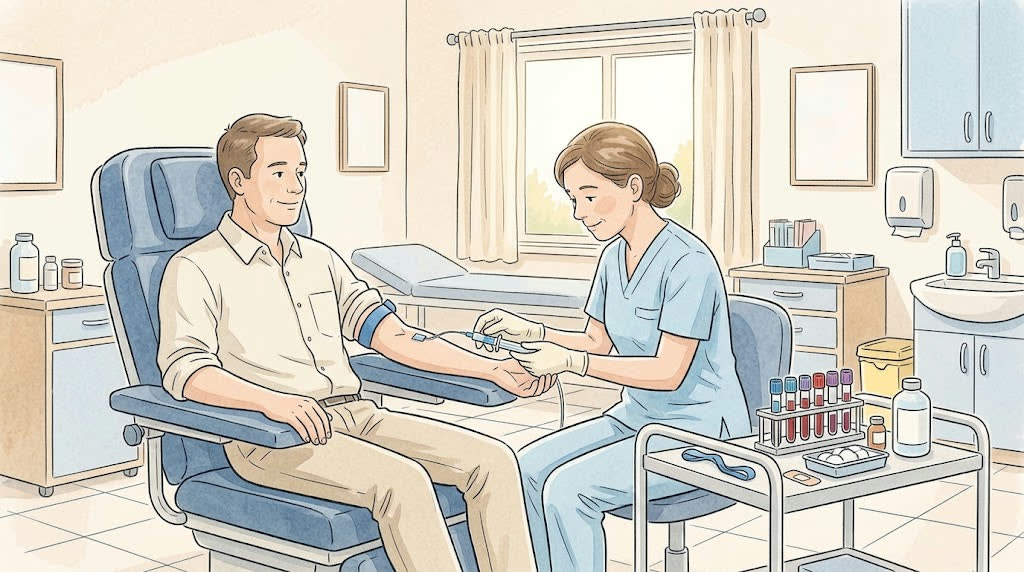
- You sit down and rest your arm on the armrest
- A band is tied above your elbow, and you are asked to clench your fist a few times
- The skin is wiped with antiseptic
- A quick prick. Blood fills the tubes in a few seconds
- The needle comes out, and a cotton pad is pressed on the spot
What you'll feel
- A quick prick, like a pinch
- Sometimes slight dizziness. Tell the nurse, and they will help you lie down
- Tell your child there will be just one prick, with no skin tests
Afterwards
- Press the cotton pad for 3 to 5 minutes
- An allergist will explain the result. On its own, it is not a diagnosis
- Do not cut foods from your diet without your doctor's advice
Contact a doctor straight away if
- The puncture site is very swollen, painful, and red
Common questions
Can I do the test during a flare-up?
Yes. You can do this blood test while taking allergy pills and during a flare-up.
How is this better than a standard test?
It shows exactly which protein you react to. This helps judge the risk of severe reactions and choose treatment.