
← All guides · Women's health and pregnancy
Visit for polycystic ovary syndrome (PCOS)
PCOS · polycystic ovary syndrome · polycystic ovaries · irregular periods
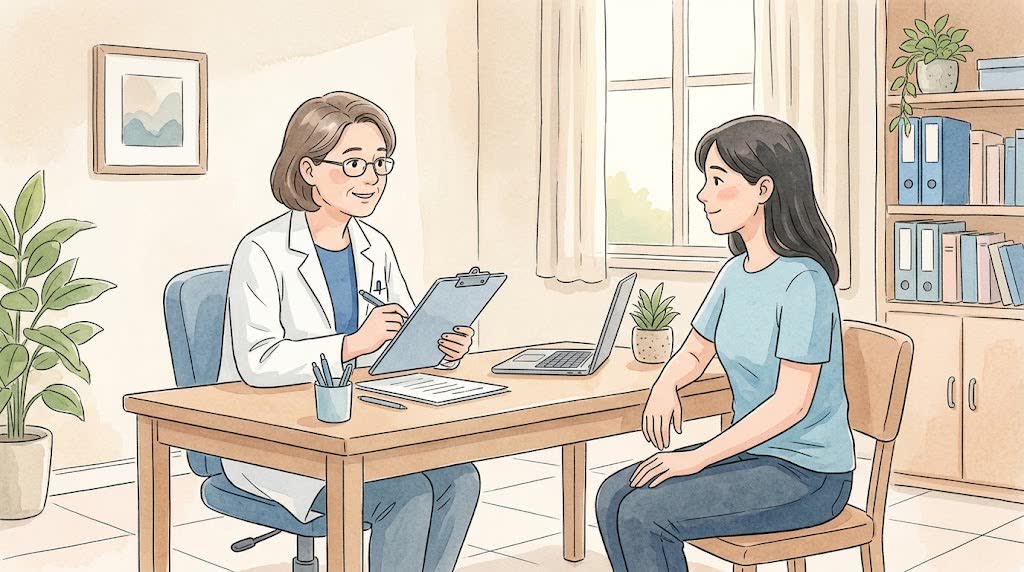
The doctor finds out why your cycle is irregular and checks your hormones and ovaries. Then they choose treatment based on your goals.
For rare or irregular periods, extra body hair, acne, or trouble getting pregnant.
⏱ Duration: the visit usually takes 30 to 40 minutes; tests are usually ready in a few days
Be sure to tell your doctor
How to prepare
- Cycle diary. Write down your period dates for the last few months.
- Tests. Hormones are usually tested on certain days of the cycle. The doctor will tell you which days.
- Documents. Bring past test results and ultrasounds.
What to bring
- Your ID
- Your cycle diary
- Past test results and ultrasounds
- A list of your medicines
How it goes
- The doctor asks about your cycle and how you feel
- Your height, weight, and blood pressure are measured
- You have an exam
- You get referrals for hormone and blood sugar tests
- A pelvic ultrasound is ordered
- At the next visit, the doctor discusses the results and treatment
What you'll feel
- A regular visit with nothing unpleasant
- An internal ultrasound may be a little uncomfortable
Afterwards
- Do the tests on the list
- You are often advised to watch your diet and stay active
- Treatment is chosen for your goal: a regular cycle or pregnancy
- You need regular checkups
Contact a doctor straight away if
- Heavy bleeding: call emergency services
- Sudden pain low in your belly
Common questions
Can I get pregnant with PCOS?
Yes, many women do, sometimes with the help of treatment.
Is it forever?
PCOS usually does not go away completely, but the symptoms can be well controlled.