
← All guides · Women's health and pregnancy
Ovulation induction
ovulation induction · ovulation stimulation · follicle tracking · ovulation monitoring
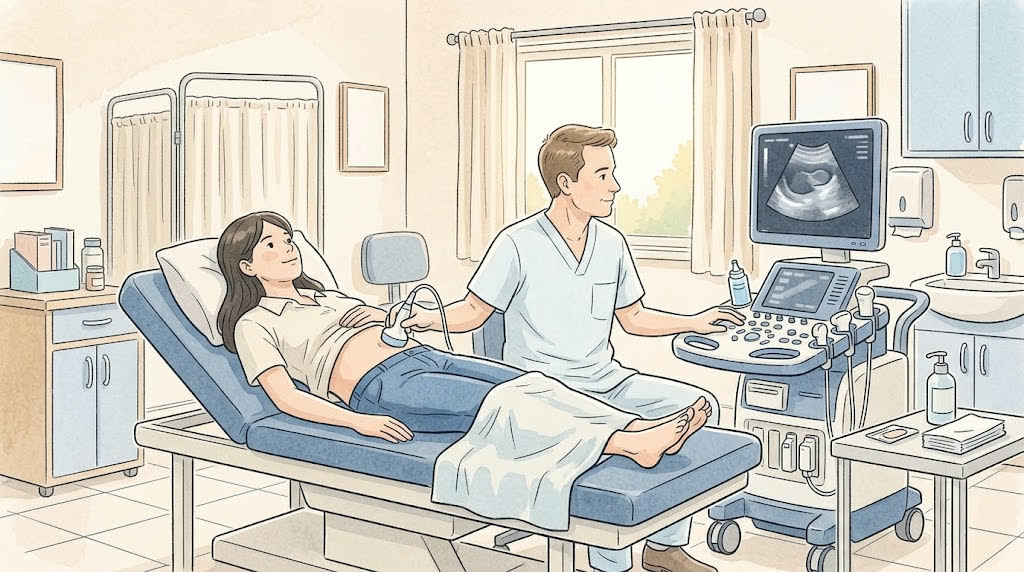
The doctor prescribes pills or injections to help an egg mature. Ultrasound is used to watch the follicle grow.
When you do not ovulate on your own or ovulate rarely, and you are planning a pregnancy.
⏱ Duration: usually one attempt is one cycle; ultrasounds of 10 to 20 minutes several times
Be sure to tell your doctor
How to prepare
- Cycle. Treatment starts on a certain day of your cycle. The doctor will tell you when to come.
- Medicines. Take them exactly as scheduled, at the same time each day.
- Calendar. Put your ultrasound dates and medicine times in your calendar.
What to bring
- Your ID
- Your cycle diary
- Your medicine schedule
- Past test results
How it goes
- At the start of the cycle, the doctor does an ultrasound
- Pills or injections are prescribed
- After a few days, you come back for an ultrasound
- The doctor checks how many follicles there are and how big
- When a follicle is mature, the doctor may prescribe a shot to trigger ovulation
- The doctor tells you which days to plan sex or a procedure
What you'll feel
- An internal ultrasound is a little unpleasant but does not hurt
- Sometimes there is bloating or pulling pain low in the belly
- Mood swings are possible
Afterwards
- Follow the doctor's instructions day by day
- Take a pregnancy test when your doctor says
- If it does not work, the treatment may be repeated
Contact a doctor straight away if
- Severe belly pain, bloating, or shortness of breath: call emergency services
- Sudden weight gain over 1 to 2 days, or little urine
- Heavy bleeding
Common questions
How many times can ovulation induction be done?
Usually a limited number of cycles in a row. Your doctor will decide how many.
Can it lead to twins?
The chance of twins is higher. That is why the doctor watches the ultrasounds closely.