
Myopia control in children (night lenses, eye drops)
myopia control · ortho-k lenses · night lenses · atropine drops for myopia
The doctor chooses a way to slow down your child's nearsightedness. This can be night lenses, special glasses, or eye drops.
When a child is nearsighted and it gets worse year after year.
⏱ Duration: fitting usually takes 1 to 2 hours; treatment lasts years, with checkups every few months
Be sure to tell your doctor
How to prepare
- Glasses. Bring your child's glasses and past prescriptions.
- Tests. Usually the length of the eye and the shape of the cornea are measured. It does not hurt.
- Habits. Think about how much time your child spends outdoors. The doctor will ask.
What to bring
- Your child's ID
- Glasses and past prescriptions
- Notes from the eye doctor
How it goes
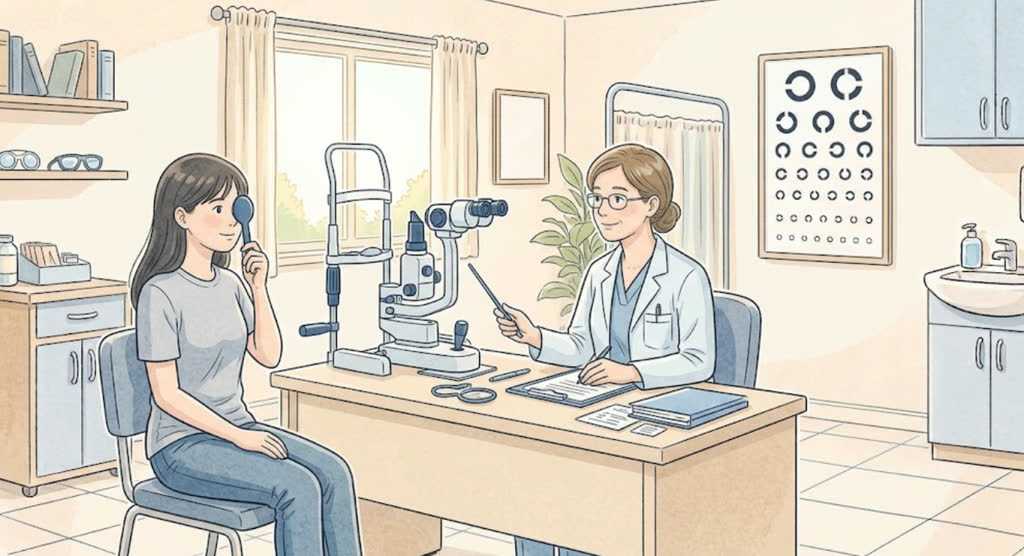
- The doctor checks vision and the eye's focusing
- The length of the eye and the shape of the cornea are measured with machines
- The doctor discusses the options with you
- If night lenses are chosen, trial lenses are fitted and you learn to put them in and take them out
- If drops are chosen, the schedule is explained
- A follow-up date is set
What you'll feel
- The tests are not painful
- Night lenses can be felt for the first few days, then children usually get used to them
- Drops may slightly widen the pupil and make the eyes sensitive to light
Afterwards
- Night lenses need strict hand and solution hygiene
- More time outdoors also helps
- Take breaks when reading or using screens
- Checkups as the doctor schedules, usually every 3 to 6 months
Contact a doctor straight away if
- The eye is red, hurts, or waters with lenses in: take the lenses out and see a doctor right away
- Sudden worse vision
- Pus or a white spot on the eye
Common questions
Can nearsightedness in a child be cured?
It usually cannot be removed completely, but its growth can be slowed down.
At what age can a child wear night lenses?
Usually from the age when the child can care for them carefully with a parent's help. The doctor decides.