
← All guides · Heart and vessel procedures
Implantable loop recorder
loop recorder · implantable cardiac monitor · insertable heart monitor · ILR
A small device about the size of a USB stick is placed under the skin of your chest. It records your heart rhythm for years.
For rare fainting spells or skipped beats that cannot be caught on a regular ECG or a 24-hour monitor.
⏱ Duration: the procedure usually takes 15 to 30 minutes; the device usually works for up to several years
Be sure to tell your doctor
How to prepare
- Food. A light breakfast is usually fine. Ask the clinic.
- Medicines. Do not stop them on your own. The doctor will tell you what to take on the day.
- Clothes. Wear comfortable clothes that do not press on your chest.
What to bring
- Your ID
- Your referral and past ECGs
- A list of your medicines
How it goes
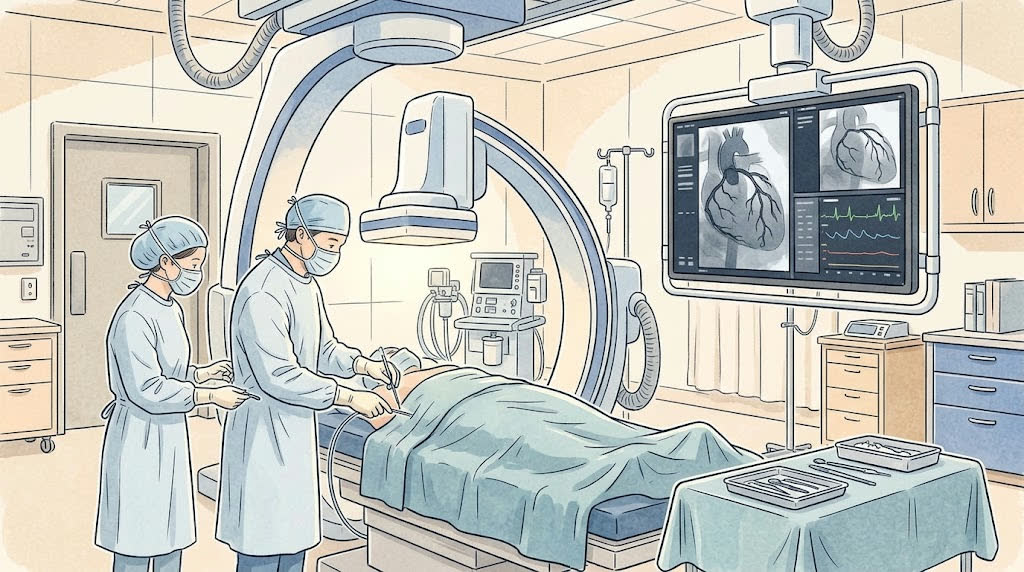
- You lie on the table, and your chest is cleaned with antiseptic
- A numbing injection is given under the skin on the left side of your chest
- The doctor makes a small cut
- The device is slipped under the skin
- The cut is closed with a stitch or skin glue
- The device is set up, and you are shown how to use it
What you'll feel
- The numbing injection lasts a few seconds
- During the procedure, you feel pressure but no pain
- The spot may ache for a couple of days
Afterwards
- Keep the area dry until your doctor allows
- During an episode, press the button on the handheld device, if you have one
- Data is sent to your doctor. The clinic will tell you how often
- When you no longer need the device, it is removed just as simply
Contact a doctor straight away if
- Redness, swelling, or pus where the device was placed
- A fever over 38°C
- Fainting or severe chest pain: call emergency services
Common questions
Can I have an MRI with it?
Most of these devices are MRI-safe under certain conditions. Show your device card before the scan.
Does the device treat the rhythm?
No. It only records. Based on the recording, the doctor decides what treatment you need.