
Transnasal gastroscopy (thin scope)
transnasal endoscopy · gastroscopy through the nose · thin gastroscope · ultrathin endoscopy
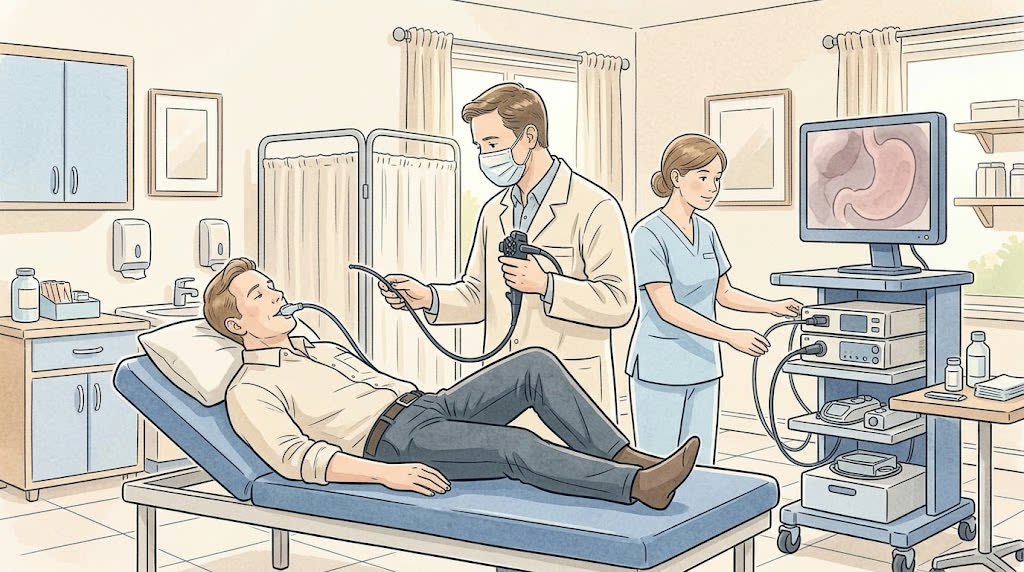
This is an exam of the esophagus, stomach, and start of the bowel with a thin tube with a camera, passed through the nose instead of the mouth.
For belly pain, heartburn, or trouble swallowing; and for people who find regular gastroscopy hard because of the gag reflex.
⏱ Duration: usually 10 to 20 minutes; the report is handed over right away, and a biopsy result takes 1 to 2 weeks
Be sure to tell your doctor
How to prepare
- Food. Usually no food for 6 to 8 hours. Water until the time the clinic says.
- Medicines. Do not stop them on your own. Ask your doctor which medicines to take in the morning.
- Nose. If your nose is blocked, tell your doctor beforehand.
What to bring
- The referral
- Past gastroscopy reports
- An ID
How it goes
- The doctor asks which nostril is easier for you to breathe through
- A numbing and decongestant spray goes into your nose
- You sit or lie on your left side
- The thin tube is passed through your nose and you are asked to swallow
- The doctor examines the esophagus, stomach, and start of the bowel, and takes a tissue sample if needed
- The tube is removed
What you'll feel
- Pressure and tickling in the nose when it goes in
- The gag reflex is usually much weaker than with regular gastroscopy
- You can talk during the procedure
- The belly feels a little full from air
Afterwards
- Until the throat numbness is gone, usually about an hour, do not eat or drink
- Nose numbness and slight bloating go away on their own
- Without sedation, you can go home and drive right away
- If a biopsy was taken, the result comes in 1 to 2 weeks
Contact a doctor straight away if
- A heavy nosebleed that does not stop in 15 minutes
- Vomiting blood or black stools: call emergency services
- Severe belly or chest pain, or a fever
Common questions
Is it easier than regular gastroscopy?
For many people yes: the tube is thinner and does not press on the back of the tongue, so there is less gagging.
Is the nose route right for everyone?
Not for everyone. With narrow nasal passages, or if treatment is needed, the doctor may choose the regular way.