
Colposcopy
colposcopy · cervix exam · cervical check with a microscope
A gynecologist looks at your cervix through a special magnifying device. The device does not go inside your body.
If your smear test shows changes, if you have HPV, or if the doctor saw an area that needs a closer look.
⏱ Duration: usually 10 to 20 minutes
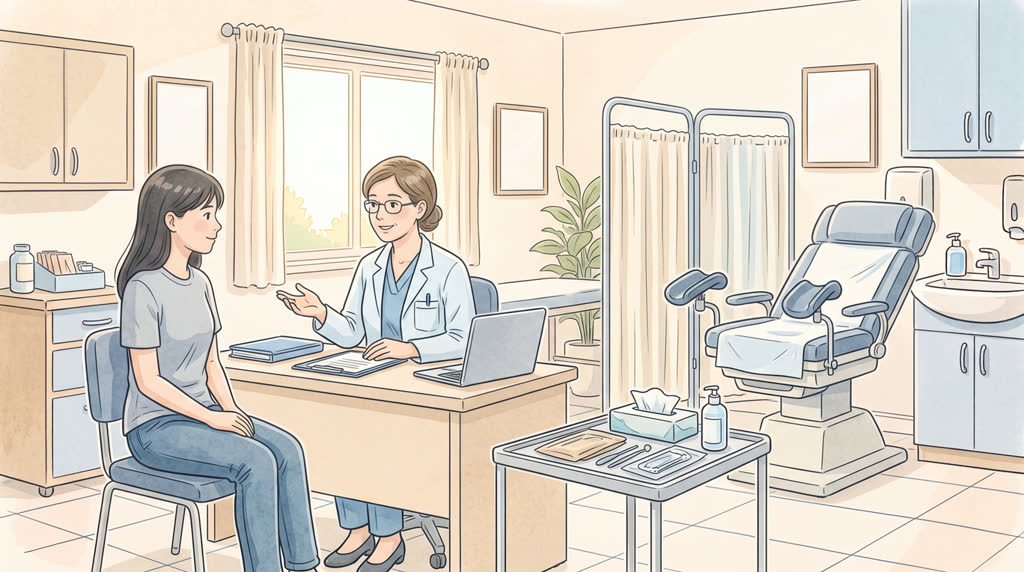
Be sure to tell your doctor
How to prepare
- Day of your cycle. Not during your period. It is usually best in the first days after it ends. Check with your doctor.
- 1 to 2 days before. No sex, douching, tampons, vaginal suppositories, or creams.
- Food. You can eat as usual.
What to bring
- Your referral
- Results of your last smear test and HPV test
- A panty liner
How it goes
- You sit in the gynecology chair
- The doctor puts in a speculum, like in a regular exam
- The device with a lens and a light stays outside, next to the chair
- The cervix is coated with a weak vinegar solution, then an iodine solution
- If needed, a tiny piece of tissue is taken for testing
What you'll feel
- The speculum feels like pressure, like in a regular exam
- The solutions may sting a little
- If a tissue sample is taken: a quick pinch or a cramp
Afterwards
- For a few days you may have dark discharge. This is from the solutions
- After a tissue sample: light spotting for a few days
- If a sample was taken, usually no sex, tampons, or baths for a few days. Your doctor will say how long
- Tissue results usually come in 1 to 2 weeks
Contact a doctor straight away if
- Heavy bleeding, more than a normal period
- A high fever, strong pain in the lower belly, or bad-smelling discharge
Common questions
Does colposcopy hurt?
Usually not. It feels like a regular gynecology exam. If a tissue sample is taken, you feel a quick, unpleasant pinch.
Can I have a colposcopy while pregnant?
Yes, it is safe. Tell your doctor you are pregnant. A tissue sample is usually taken only for a serious reason.