
DHEA-S and 17-OH progesterone
DHEA sulfate · 17-OHP · 17-hydroxyprogesterone · adrenal hormone test · androgen test for women
This blood test checks hormones made by the adrenal glands. It shows whether you have too much of the male-type hormones.
For irregular periods, extra body hair, acne, or trouble getting pregnant. In children, for puberty that starts too early.
⏱ Duration: the blood draw takes a few minutes; results usually come in 1 to 5 days
Be sure to tell your doctor
How to prepare
- Timing. Usually in the morning, on an empty stomach. Plain water is fine.
- Cycle day. For women, the doctor usually picks a certain day of the cycle. Check it ahead.
- The day before. No alcohol, hard workouts, or stress. Do not smoke in the morning.
- Medicines. Do not stop anything on your own. Tell your doctor what you take. They will decide if anything needs to change before the test.
What to bring
- Your referral or list of tests
- Your ID
- Past hormone test results
- The date your last period started
How it goes
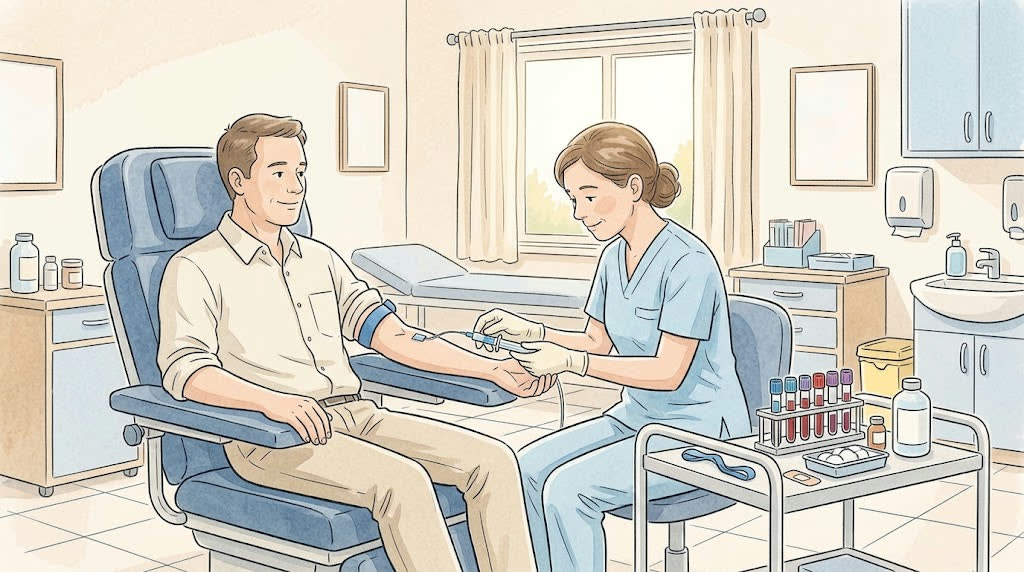
- You sit down and rest your arm on the armrest
- A band is tied above your elbow, and you are asked to clench your fist a few times
- The skin is wiped with antiseptic
- A quick prick. Blood fills the tubes in a few seconds
- The needle comes out, and a cotton pad is pressed on the spot
What you'll feel
- A quick prick, like a pinch
- Sometimes slight dizziness. Tell the nurse, and they will help you lie down
Afterwards
- Press the cotton pad for 3 to 5 minutes
- You can eat right away
- The doctor will look at the result together with your other hormones
Contact a doctor straight away if
- The puncture site is very swollen, painful, and red
Common questions
Why does the cycle day matter?
The 17-OH progesterone level changes during the cycle. If you test on the wrong day, the result is hard to read.
Can a child have this test?
Yes. The doctor orders it, and a parent brings the child in the morning on an empty stomach, unless the doctor says otherwise.