
Antistreptolysin O (ASO)
ASO test · ASO titer · antistreptolysin O · strep antibody test · rheumatic tests
This blood test looks for antibodies to strep bacteria. It shows whether you had a recent strep infection.
For painful, swollen joints, for changes in urine tests or the heart after strep throat, and for frequent strep throat.
⏱ Duration: the blood draw takes a few minutes; results usually come in 1 to 3 days
Be sure to tell your doctor
How to prepare
- Food. You usually do not need to fast strictly, but it is better to come 3 to 4 hours after a light, non-fatty meal. Check with the lab.
- The day before. For 24 hours: no alcohol and no hard workouts. Try not to smoke in the morning.
- Medicines. Do not stop anything on your own. Tell your doctor what you take. They will decide if anything needs to change before the test.
- Clothing. A sleeve you can easily roll up above the elbow.
What to bring
- Your referral or list of tests
- Your ID
- Past ASO results
- Your urine test, if you had one
How it goes
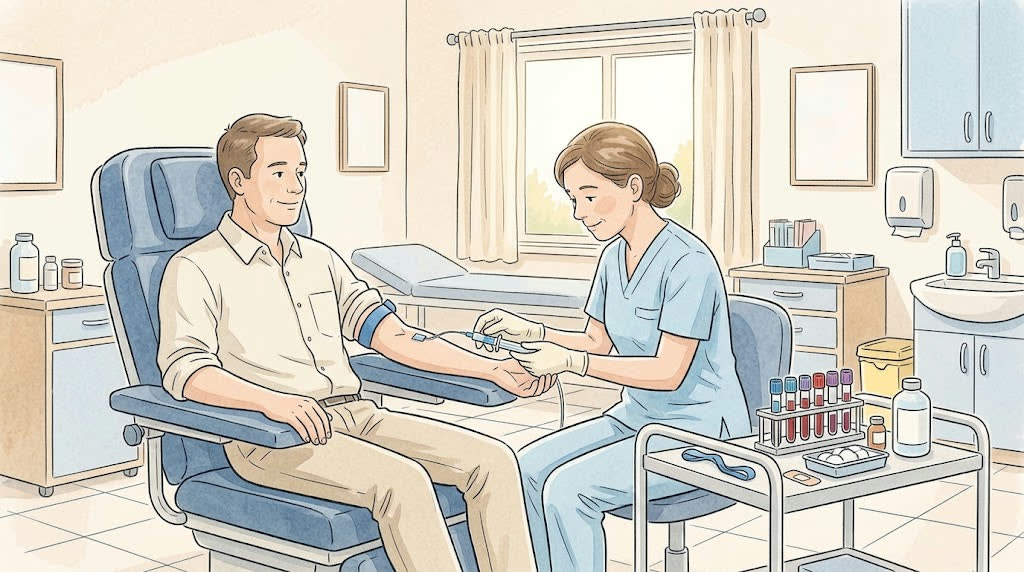
- You sit down and rest your arm on the armrest
- A band is tied above your elbow, and you are asked to clench your fist a few times
- The skin is wiped with antiseptic
- A quick prick. Blood fills the tubes in a few seconds
- The needle comes out, and a cotton pad is pressed on the spot
What you'll feel
- A quick prick, like a pinch
- Sometimes slight dizziness. Tell the nurse, and they will help you lie down
Afterwards
- Press the cotton pad for 3 to 5 minutes
- ASO does not rise right after strep throat. Sometimes the test is repeated after a few weeks
- A high ASO with no symptoms is usually not treated. Your doctor decides
Contact a doctor straight away if
- The puncture site is very swollen, painful, and red
- Swelling, dark cola-colored urine, or shortness of breath after strep throat: see a doctor urgently
Common questions
Does a high ASO mean rheumatic fever?
No. It only shows you had strep recently. The doctor makes a diagnosis based on everything.
Do I need antibiotics if my ASO is high?
Not always. Your doctor decides. Do not start antibiotics on your own.