
ACTH (adrenocorticotropic hormone)
ACTH test · adrenocorticotropin · corticotropin · pituitary hormone test
This blood test checks the hormone the brain uses to control the adrenal glands.
When cortisol is too high or too low and the doctor needs to find the cause: in the adrenal glands or in the brain.
⏱ Duration: the blood draw takes a few minutes; results usually come in a few days
Be sure to tell your doctor
How to prepare
- Timing. Blood is usually taken early in the morning, on an empty stomach. Plain water is fine.
- Rest. The day before: no alcohol, workouts, or stress. Sit quietly for a few minutes before the draw.
- Medicines. Do not stop anything on your own. Tell your doctor what you take. They will decide if anything needs to change before the test.
- Clothing. A sleeve you can easily roll up above the elbow.
What to bring
- Your referral or list of tests
- Your ID
- Your cortisol test results
- A list of your medicines, including creams and inhalers
How it goes
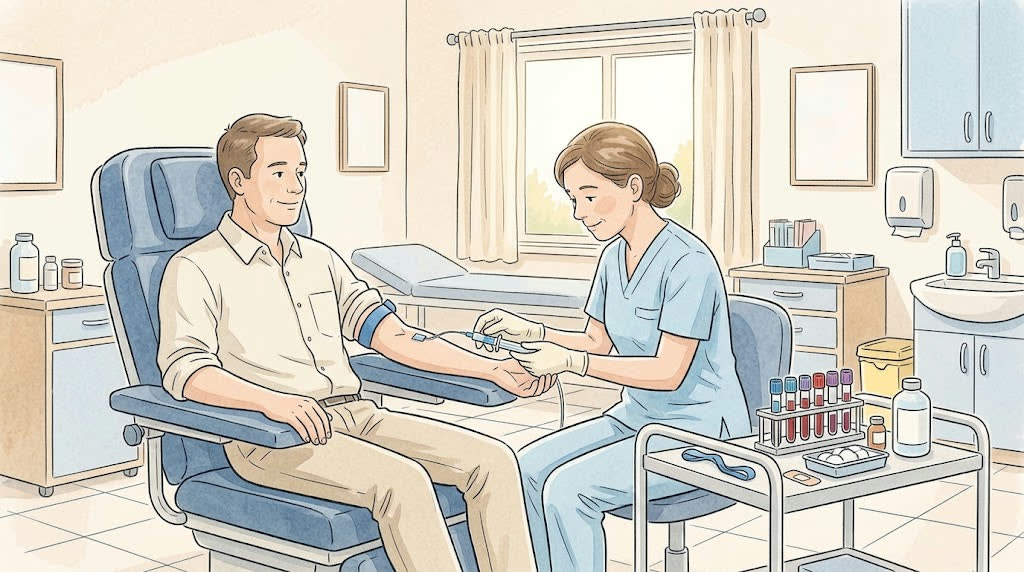
- You sit quietly for a few minutes
- A band is tied above your elbow, and you are asked to clench your fist a few times
- The skin is wiped with antiseptic
- A quick prick. Blood fills the tubes in a few seconds
- The needle comes out, and a cotton pad is pressed on the spot
- The tube is put on ice right away and sent to the lab quickly
What you'll feel
- A quick prick, like a pinch
- Sometimes slight dizziness. Tell the nurse, and they will help you lie down
Afterwards
- Press the cotton pad for 3 to 5 minutes
- You can eat and take your morning medicines, if your doctor said so
- The doctor looks at the result together with your cortisol
Contact a doctor straight away if
- The puncture site is very swollen, painful, and red
Common questions
Why must the test be done in the morning?
ACTH changes a lot during the day. It is highest in the morning, so it is easier to compare with normal values.
Can steroid creams affect the result?
They can. Be sure to tell your doctor about them. They will decide what to do.