
← All services · X-ray, CT, MRI
Spine X-ray
spine X-ray · back X-ray · neck X-ray · lower back X-ray
An X-ray picture of your spine. It shows the bones and vertebrae. The radiation dose is small.
For back or neck pain after an injury, a curved spine, or to check results after treatment.
⏱ Duration: usually 5 to 15 minutes
Be sure to tell your doctor
How to prepare
- Preparation. For the neck and upper back, no special preparation is needed.
- Lower back. For a lower back X-ray, you may be asked to avoid foods that cause gas the day before and to empty your bowels. Check with your clinic.
- Clothing. Take off jewelry, necklaces, your belt, and any bra with metal. Metal shows up on the image.
What to bring
- Your referral
- Past X-rays, for comparison
How it goes
- You undress to the waist or lower, depending on the part of the spine
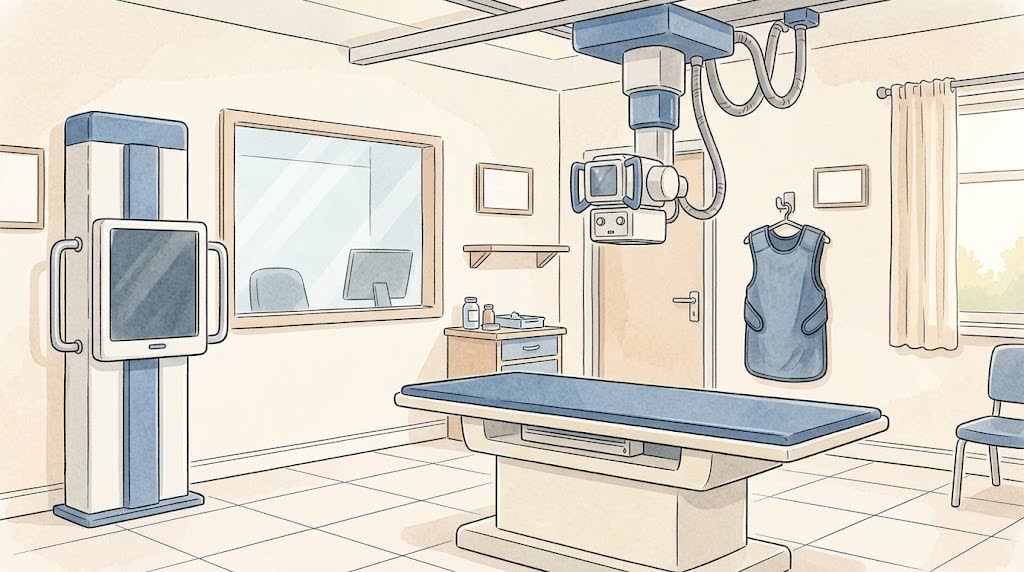
- You stand or lie down by the machine
- The technician puts you in the right position and steps out
- You need to stay still and hold your breath for a few seconds
- Usually two pictures are taken, from the front and the side, sometimes while you bend
What you'll feel
- Nothing. You cannot feel the X-ray itself
- If your back hurts, it may be hard to hold the position. Tell the technician
Afterwards
- You can go back to your day right away
- The images and report are usually ready the same day or the next day
Contact a doctor straight away if
- If your arms or legs go numb or weak after an injury, do not move on your own. Call emergency services
- Back pain with trouble peeing or numbness in the groin: see a doctor right away or call emergency services
Common questions
Is a spine X-ray harmful?
The dose is small. The doctor orders an X-ray when the benefit is greater than the risk. Tell them in advance if you are pregnant.
Can an X-ray show a herniated disc?
No. An X-ray shows bones. A herniated disc shows up on an MRI.