
← All services · Heart, lungs and nerves tests
Exercise ECG
exercise stress test · treadmill test · cardiac stress test · exercise tolerance test
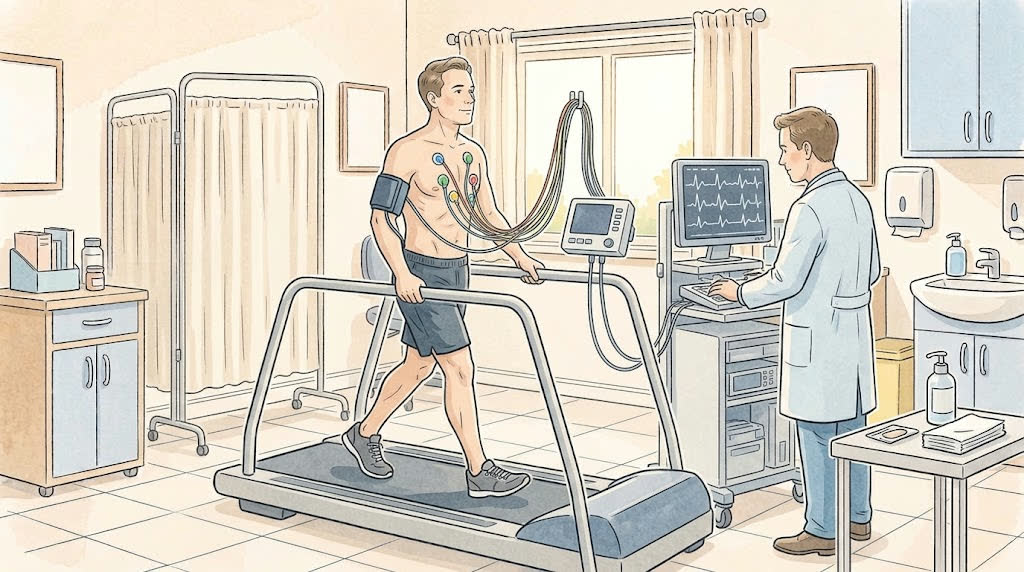
Your ECG is recorded while you walk on a treadmill or pedal an exercise bike. The effort is increased step by step.
To check if your heart gets enough blood during effort: for chest pain when walking, after a stent, or before sports.
⏱ Duration: usually 30 to 60 minutes in the room; the exercise itself takes 8 to 15 minutes
Be sure to tell your doctor
How to prepare
- Food. Have a light meal 2 to 3 hours before. Do not come hungry, and do not overeat.
- Coffee and smoking. No coffee, strong tea, or cigarettes for a few hours before the test.
- Clothes. Sportswear and comfortable walking shoes. A towel and water.
What to bring
- Your referral
- Past ECGs and medical reports
- A list of your medicines
- Your sportswear
How it goes
- The doctor asks how you feel and checks your blood pressure
- Pads are stuck on your chest, and a blood pressure cuff goes on your arm
- You start walking slowly. Every few minutes the speed or slope goes up
- Your blood pressure and ECG are recorded the whole time. The doctor is close by
- The test stops when your pulse reaches the target, or if you feel unwell
- You rest for a few minutes while the recording continues
What you'll feel
- You will get tired, like after walking fast uphill. This is expected
- Faster breathing and pulse are normal
Afterwards
- You can usually go home after 10 to 15 minutes
- The doctor explains the result the same day
Contact a doctor straight away if
- During the test: chest pain or pressure, strong shortness of breath, or dizziness. Tell the doctor right away
- At home: chest pain that does not go away. Call emergency services
Common questions
Is it dangerous?
The test is done under a doctor's watch and stopped at the first sign of a problem. The risks are small, but tell the doctor about chest pain right away.