
Donating blood
blood donation · giving blood · becoming a blood donor · plasma donation
You donate about 450 mL (about 1 pint) of blood, or a part of it, such as plasma or platelets, for free. This blood saves other people's lives.
Donor blood is needed for surgery, injuries, childbirth, and treatment of cancer and blood disorders.
⏱ Duration: usually about an hour with the form and checkup; giving whole blood takes about 10 minutes, plasma takes longer
Be sure to tell your doctor
How to prepare
- Requirements. Usually a donor can be a healthy adult aged 18 or older, weighing at least 50 kg (110 lb). The blood center will tell you the exact rules.
- Food. Do not come hungry. Have a light, low-fat breakfast: porridge made with water, crackers, sweet tea.
- The day before. No alcohol for 2 days before. The day before, no fatty food, and get a good sleep. Do not smoke for an hour before donating.
What to bring
- Your photo ID
- Water
How it goes
- You fill out a health form
- A drop of blood from your finger is tested for hemoglobin
- A doctor checks your blood pressure and does a short exam
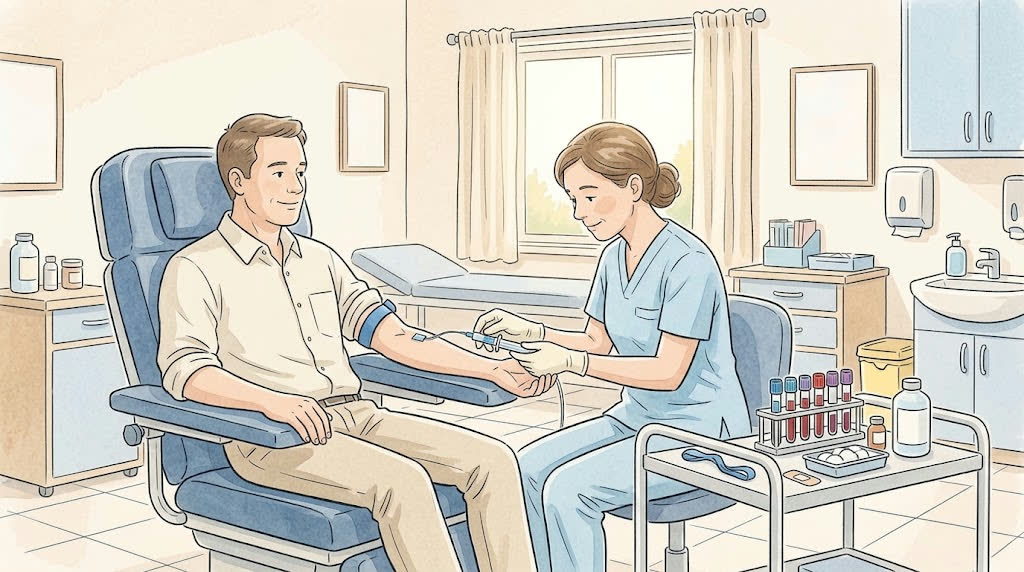
- You lie down in the donor chair
- A needle goes into a vein in the bend of your elbow, and blood collects in a bag
- The needle comes out, and a bandage is put on
What you'll feel
- A prick when the needle goes in
- Sometimes slight dizziness. Tell the nurse right away
Afterwards
- Sit for 10 to 15 minutes and drink sweet tea
- Keep the bandage on for 3 to 4 hours
- That day, drink more, and avoid heavy exercise and alcohol
- You can donate again only after the time the blood center tells you
Contact a doctor straight away if
- Fainting again or strong weakness at home: tell a doctor
- Your arm becomes swollen, very painful, or numb
Common questions
Can I catch an infection by donating blood?
No. Needles and bags are single-use and opened in front of you.
How long does it take to recover?
The fluid comes back in 1 to 2 days. Blood cells take a few weeks, so a break is needed between donations.