
Lymph node biopsy
lymph node biopsy · fine needle aspiration of a lymph node · excisional lymph node biopsy · core needle biopsy
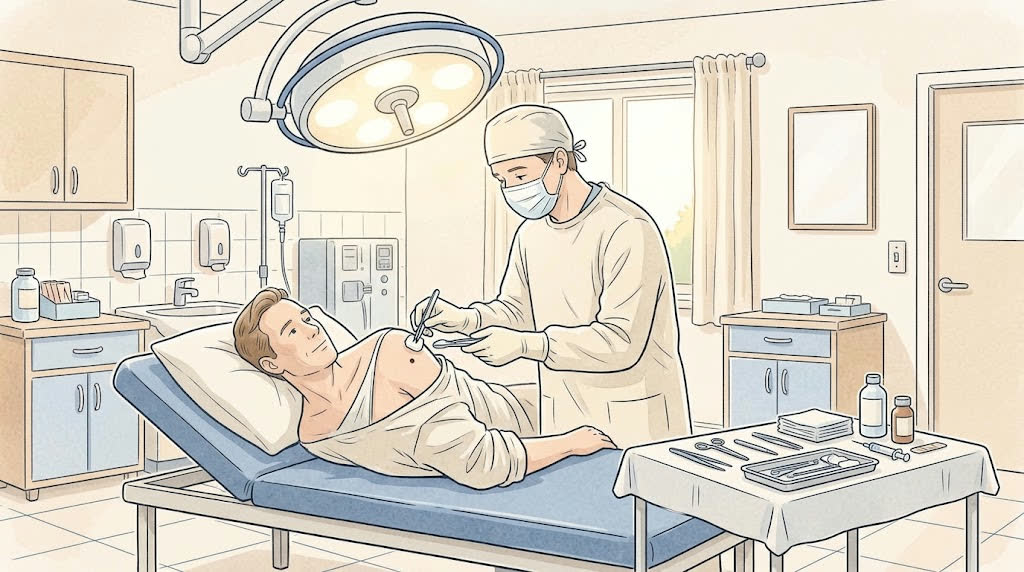
The doctor takes a piece of an enlarged lymph node, or removes the whole node, to look at it under a microscope. This is done with a needle and ultrasound, or through a small cut.
When a lymph node has been enlarged for a long time with no clear cause, for a possible blood disorder or tumor, or to clarify a diagnosis.
⏱ Duration: a needle biopsy usually takes 15 to 30 minutes, removing a node 30 to 60 minutes; results usually in 1 to 2 weeks
Be sure to tell your doctor
How to prepare
- Type of biopsy. Your doctor will tell you whether a needle or a cut will be used, and what kind of numbing or anesthesia.
- Food. With local numbing, you can usually eat. With general anesthesia, follow the clinic's rules on food and drink.
- Someone with you. If you have anesthesia or sedation, you need someone to take you home.
What to bring
- Your referral, tests, and lymph node ultrasound
- A list of your medicines
- Someone to take you home, if you have anesthesia
How it goes
- You lie in a position that gives easy access to the node
- The skin is cleaned and numbed
- For a needle biopsy, the needle goes into the node with ultrasound guidance
- For an open biopsy, a small cut is made and the node is removed
- The spot is stitched or closed with skin tape
- A bandage is put on
What you'll feel
- A prick and stinging from the numbing
- Pressure during the procedure
- Afterward, mild pain and swelling at the spot
Afterwards
- You usually go home the same day
- Keep the bandage dry for as long as your doctor says
- Stitches are removed after 7 to 10 days, or they dissolve
- Your doctor usually explains the results at a visit
Contact a doctor straight away if
- Strong swelling, or blood soaking through the bandage
- A fever over 38°C (100.4°F), or redness and pus at the cut
- If the biopsy was on the neck and it becomes hard to breathe or swallow: call emergency services
Common questions
Is an enlarged lymph node dangerous?
Most often lymph nodes swell because of an infection. A biopsy is needed to find the exact cause.
Why remove the whole node?
Sometimes the whole node is needed for an accurate diagnosis, not just a piece. Your body works fine without one node.