
Subcutaneous injection
subcutaneous injection · shot under the skin · SC injection · belly injection
Medicine is given with a thin, short needle into the fat layer under the skin, usually on the belly, upper arm, or thigh.
This is how insulin, blood clot medicines, some hormones, and vaccines are given, as your doctor prescribes.
⏱ Duration: the injection itself takes less than a minute
Be sure to tell your doctor
How to prepare
- Prep. Usually none. You can eat and drink.
- Clothing. Clothes that make it easy to uncover your belly or upper arm.
What to bring
- Your doctor's prescription
- The medicine, if you bought it yourself
How it goes
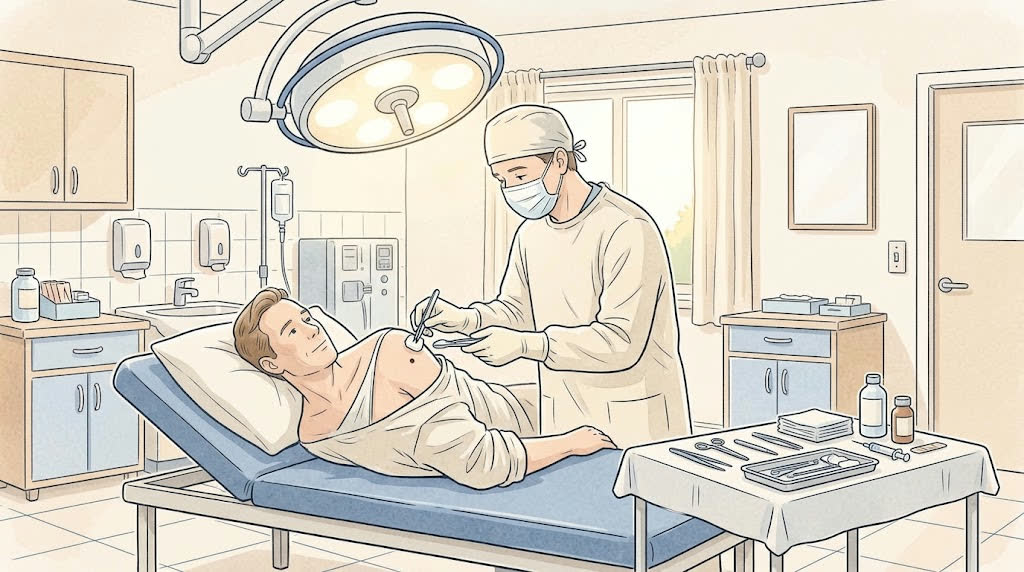
- The nurse checks the prescription and the medicine
- A spot is chosen: the belly around the navel, the upper arm, or the thigh
- The skin is wiped with antiseptic
- The skin is pinched into a fold, and the needle goes in quickly
- The medicine is given slowly, and the needle comes out
What you'll feel
- A quick prick
- Some medicines sting a little as they go in
Afterwards
- Do not rub the spot, unless the nurse says otherwise
- A small bruise can happen and goes away on its own
- For a course of injections, use a different spot each time
Contact a doctor straight away if
- Swelling of the face or lips, trouble breathing, or a rash all over: call emergency services
- The injection site becomes very red, hot, and painful
Common questions
Why injections in the belly?
There is plenty of fat under the skin there, so the medicine is absorbed evenly. It does not hurt more than the arm.
Why do I get bruises after belly injections?
Blood clot medicines often cause bruises. If they are very large, tell your doctor.