
← All services · X-ray, CT, MRI
Spine CT scan
spine CT · lumbar spine CT · neck CT · CT scan of the back
Cross-section images of your vertebrae. They show bones best: fractures, a narrowed spinal canal, and bone spurs.
After a back injury, for pain, if MRI is not possible, before surgery, and to check after it.
⏱ Duration: usually 10 to 15 minutes in the room; the report the same day or in 1 to 2 days
Be sure to tell your doctor
How to prepare
- Without contrast. No prep needed. You can eat and drink.
- With contrast. Usually no food for 3 to 4 hours. Water is fine. Sometimes a creatinine blood test is needed. Check with the clinic.
- Clothing. No metal in the scan area: zippers, clasps, or belts.
What to bring
- Your referral
- Past CT and MRI scans of the spine
- Painkillers your doctor prescribed, if the pain is strong
How it goes
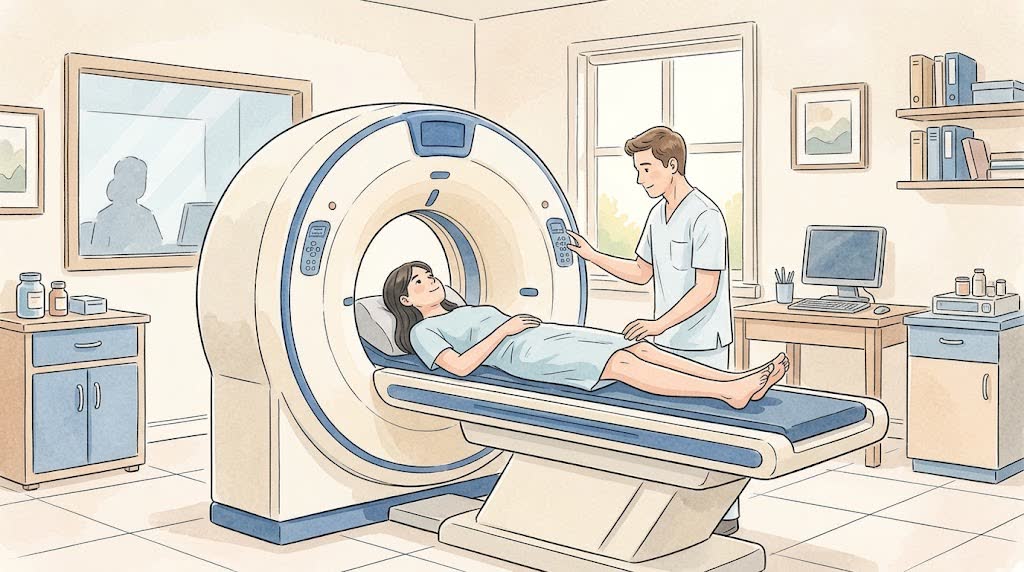
- You lie on the table, and the technician helps you get comfortable
- The table moves into the wide ring of the scanner
- Keep still, and sometimes hold your breath on command
- If contrast is used, it goes into a vein and more images are taken
What you'll feel
- It does not hurt. The scanner hums quietly
- The ring is wide, so it does not feel cramped
- With contrast: a wave of warmth and a metallic taste. It passes in a minute
Afterwards
- You can go back to your day right away
- After contrast, drink more water, unless your doctor said otherwise
- Take the report to a neurologist or spine surgeon
Contact a doctor straight away if
- Numbness between the legs, trouble peeing, or sudden weakness in the legs: call emergency services right away
- After contrast: itching, a rash, a swollen face, or trouble breathing. Tell the staff right away or call emergency services
Common questions
Which is better for a herniated disc, CT or MRI?
Discs and nerves are seen better on MRI. CT shows bones better. Your doctor chooses.
Can I have a spine CT with metal in my back?
Yes. Metal does not rule out CT, but it may slightly affect the images.