
← All services · X-ray, CT, MRI
CT angiography
CT angiogram · CTA scan · CT of blood vessels · coronary CT angiography
A CT scan of your blood vessels. Contrast dye is injected into a vein, and the machine takes pictures that show how blood flows through your vessels.
To check the blood vessels of the heart, head, neck, lungs, legs, or the aorta: to find narrowing, a blockage, or a bulge.
⏱ Duration: usually 15 to 30 minutes with preparation; the scan itself takes a few minutes
Be sure to tell your doctor
How to prepare
- Blood test. You are usually asked to do a creatinine test beforehand. This blood test shows how well your kidneys work.
- Food. Usually no food for 2 to 4 hours before the scan. Your clinic will give you the exact time.
- Water. Plain water is usually fine, and even helpful. It helps the dye leave your body faster.
- Heart. If your heart vessels are checked, you are usually asked to skip coffee and strong tea that day. Sometimes you get a medicine to slow your pulse, so the pictures are clearer.
What to bring
- Your referral
- Your creatinine test result
- Past CT or MRI scans
- A list of your medicines
How it goes
- You take off metal items
- A nurse puts a cannula into a vein in your arm
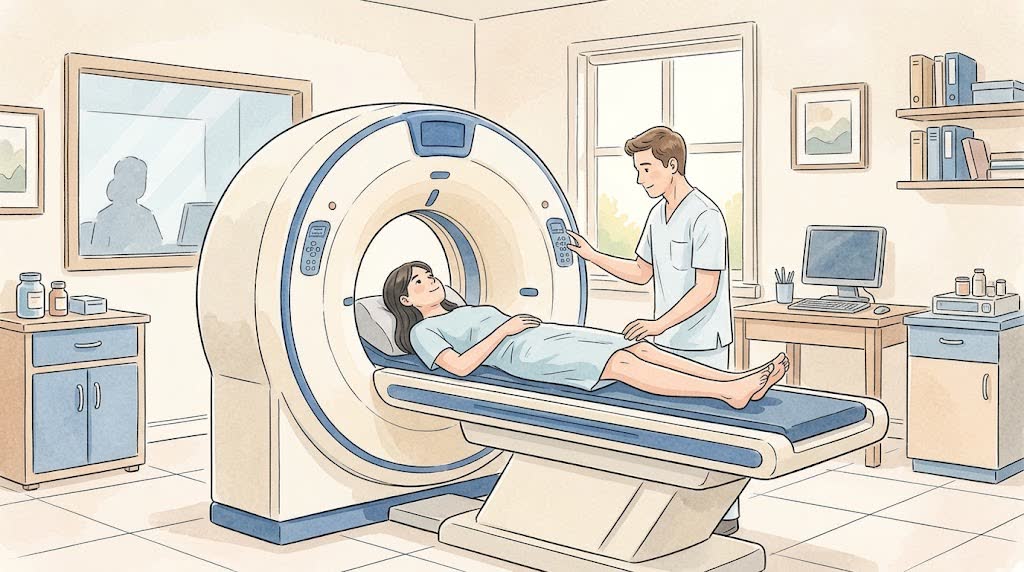
- You lie down on the scanner table
- Contrast dye is injected through the cannula
- The table moves through the ring of the machine
- You are asked to hold your breath for a few seconds and stay still
What you'll feel
- When the dye goes in, you may feel a wave of warmth through your body
- Sometimes it feels like you need to pee. This feeling passes quickly
- You may have a metal taste in your mouth
Afterwards
- After the scan, you are usually asked to wait 15 to 30 minutes, to make sure you have no reaction to the dye
- The cannula is removed
- Drink extra water that day, unless your doctor says otherwise
- The report is usually ready within 1 to 2 days
Contact a doctor straight away if
- Rash, itching, a swollen face or lips, or trouble breathing: tell staff right away or call emergency services
- Strong swelling, pain, or redness where the needle was
Common questions
Is CT contrast dye dangerous?
Most people handle it well. Allergy is rare, so it is important to tell your doctor about allergies and kidney disease beforehand.
How is CT angiography different from regular coronary angiography?
In CT, a cannula goes only into a vein in your arm, and the machine takes the pictures. In coronary angiography, a thin tube is passed through an artery to the heart.