
Childhood vaccines
childhood immunizations · baby shots · vaccination schedule · child vaccines
A vaccine is injected into the upper arm or thigh. It teaches your child's body to protect itself from a dangerous disease in advance.
Following the national vaccination schedule, from birth to school age, and to catch up on missed vaccines.
⏱ Duration: the shot takes a few seconds, the whole visit usually 30 to 60 minutes
Be sure to tell your doctor
How to prepare
- Health. Vaccines are given to a healthy child. Before the shot, the doctor or nurse checks your child and takes their temperature.
- Mood. Talk to your child calmly and honestly: it will be quick and hurt a little. Do not use the shot as a threat.
- Food. No special limits. Feed your child as usual. You can breastfeed right after the shot.
- Clothes. Dress your child in something comfortable so the arm or leg is easy to uncover.
What to bring
- Your child's vaccination record
- Your child's documents
- A favorite toy
- Water or a bottle
How it goes
- The doctor checks your child and gives the go-ahead
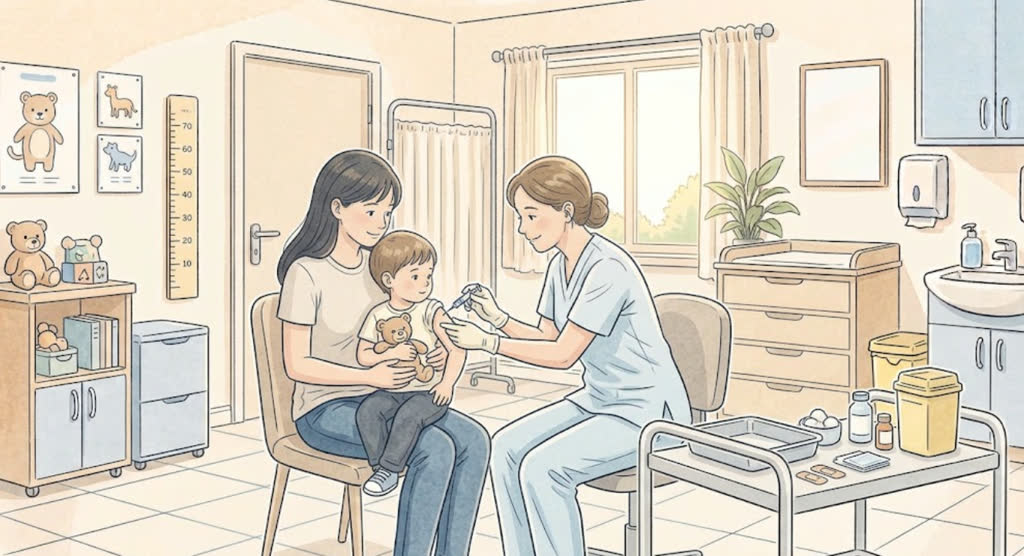
- You hold your child on your lap or stay close
- The nurse wipes the skin and quickly gives the shot
- The vaccine is written in the record
- After the shot, you stay at the clinic for about 30 minutes
What you'll feel
- A quick pain from the shot. Your child may cry
- Redness and slight swelling where the shot was given
- Sometimes in the first days: fever, fussiness, sleepiness
Afterwards
- Stay near the room for 30 minutes, so the doctor can help if there is a reaction
- Do not rub or warm the injection spot
- Bathing is usually fine
- If your child gets a fever, the doctor will tell you what to give
Contact a doctor straight away if
- Trouble breathing, a swollen face or lips, or a rash all over the body: call emergency services
- Seizures, or your child is floppy and hard to wake: call emergency services
- A fever above 39 degrees that does not come down
- Your child cries nonstop for more than three hours
Common questions
Can my child be vaccinated with a runny nose?
The doctor decides at the checkup. A mild runny nose without fever often is not a problem, but if your child is ill, the vaccine is usually postponed.
Is a fever after a vaccine normal?
Yes, a mild fever in the first days is common. It is the immune system responding. If it is high or does not go away, see the doctor.