
Stitches for a wound
stitches · sutures · wound stitching · getting stitches for a cut
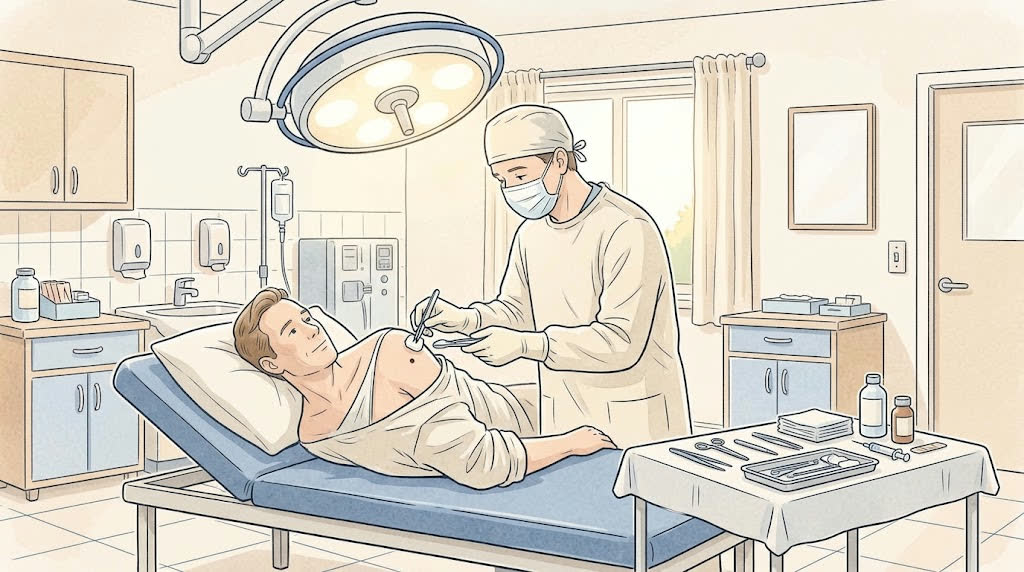
The doctor cleans the wound and closes it with stitches, staples, or special skin glue. This helps it heal faster and leaves a neater scar.
For deep cuts, wounds with gaping edges, or wounds on the face, hands, or joints.
⏱ Duration: usually 15 to 40 minutes; stitches usually come out after 5 to 14 days, depending on the spot
Be sure to tell your doctor
How to prepare
- Bleeding. Press a clean cloth on the wound and hold it. Raise the arm or leg above heart level.
- Timing. The sooner the better. Doctors usually try to close a wound within the first hours.
- Do not. Do not pour alcohol into the wound or put anything on it. You can rinse it with clean water.
What to bring
- Your ID
- Your tetanus shot record, if you have it
How it goes
- The doctor examines the wound
- The wound is rinsed and cleaned with antiseptic
- Numbing injections are given around it
- The edges are stitched or held together
- A bandage is put on
- You are told when to come for a dressing change and stitch removal
What you'll feel
- The numbing injections sting for a few seconds
- During stitching you feel pulling, but no pain
- When the numbing wears off, the wound will ache
Afterwards
- Keep the bandage dry for the first 1 to 2 days, or as long as your doctor says
- Do not pick at scabs
- Have the stitches removed on time, not earlier and not later
- After the stitches are out, protect the scar from the sun
Contact a doctor straight away if
- Heavy bleeding that does not stop with pressure: call emergency services
- The wound becomes red, hot, or has pus, or you get a fever
- The stitches come apart
- Numbness, or fingers that do not move well
Common questions
When do stitches come out?
Usually after 5 to 7 days on the face, 7 to 10 days on the body and arms, and longer on the legs and joints. Your doctor will tell you exactly.
Can I shower with stitches?
Usually a short shower is fine after 1 to 2 days. Then pat the wound dry. Ask your doctor.