
Pre-op anesthesia assessment
pre-anesthesia assessment · pre-op assessment · anesthesia consultation · pre-operative checkup
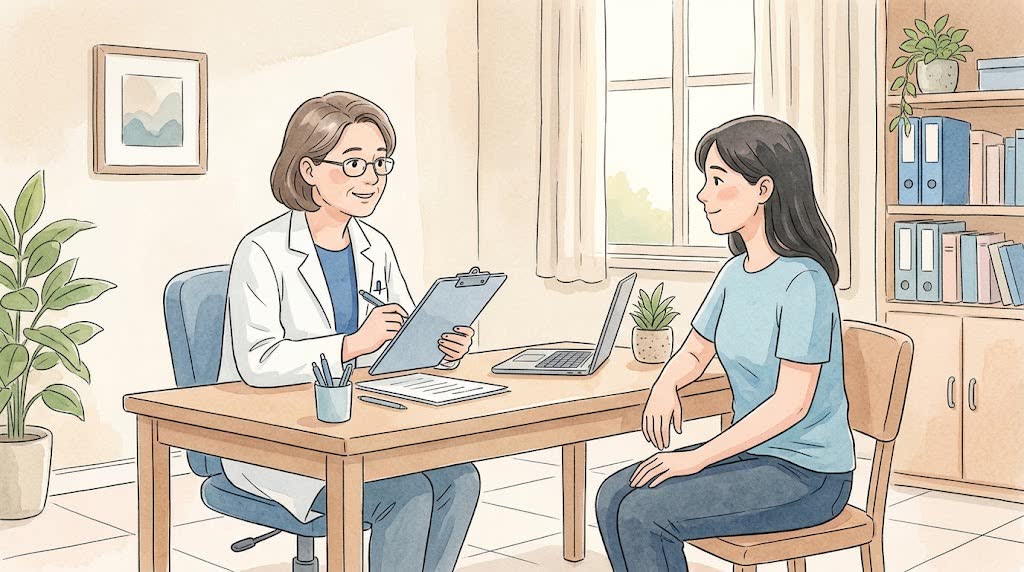
The anesthetist gets to know you, asks about your health, and chooses the safest anesthesia for your surgery.
Before any surgery or procedure under general anesthesia, sedation, or spinal anesthesia.
⏱ Duration: usually 15 to 30 minutes; sometimes a few days before, sometimes the day before or the day of surgery
Be sure to tell your doctor
How to prepare
- List. Write down your medicines with doses and your questions in advance.
- Documents. Gather your test results, ECG, and doctors' reports.
- Questions. Ask what kind of anesthesia it will be, when to stop eating, and what to do with your medicines that morning.
What to bring
- Test results and ECG
- Doctors' reports
- A list of your medicines
- Your ID
How it goes
- The anesthetist asks about your health and past surgeries
- Your heart and lungs are checked, and your blood pressure measured
- Your mouth and neck are checked to see how easy breathing support will be
- Your test results are reviewed. Sometimes more are ordered
- The type of anesthesia is suggested and the risks explained
- You are told when to stop eating and drinking and what to do with medicines
- You sign a consent form for anesthesia
What you'll feel
- It is just a conversation and a short exam, with no pain
- Feeling nervous is normal. Ask anything that worries you
Afterwards
- Write down the time after which you must not eat or drink
- Do with your medicines only what the doctor said
- If you get ill before surgery, call the clinic
Common questions
Can I choose the type of anesthesia?
You can share your wishes. In the end, the anesthetist chooses the safest option for you.
Why mention my teeth?
A loose tooth or denture can get in the way of placing the breathing tube. The doctor will plan for it.