
← All services · Women's health and pregnancy
First pregnancy appointment
first prenatal visit · booking appointment · first antenatal appointment · pregnancy confirmation visit
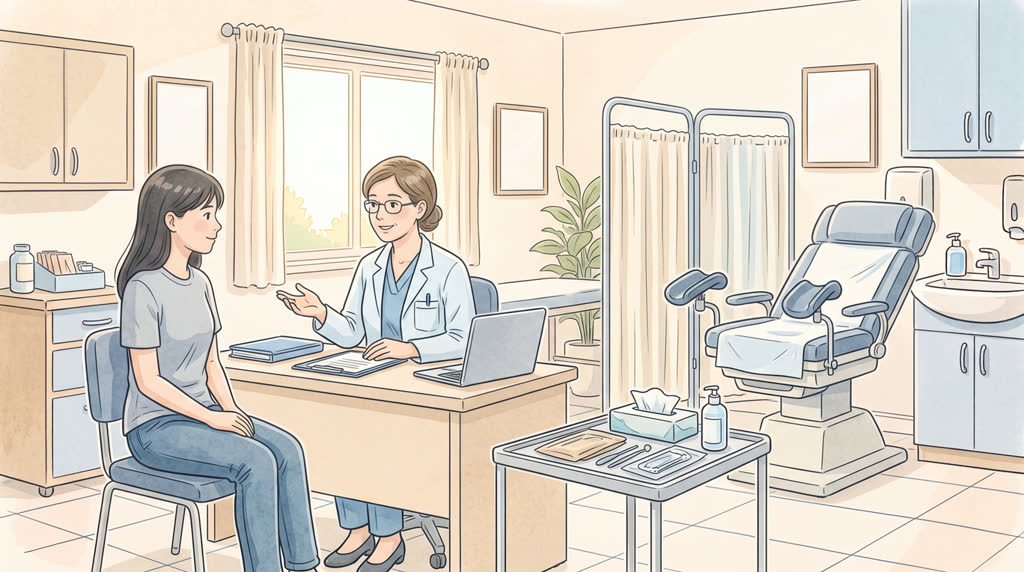
Your first visit to a gynecologist for your pregnancy. The doctor confirms the pregnancy, asks about your health, and makes a care plan.
As soon as you know you are pregnant. Usually you are advised to register before 12 weeks.
⏱ Duration: the visit usually takes 30 to 60 minutes; test results come in 1 to 7 days
Be sure to tell your doctor
How to prepare
- Medicines. Do not stop your regular medicines on your own. Tell your doctor, and they will decide what is safe in pregnancy.
- Questions. Write down what you want to ask: diet, work, exercise, vitamins.
- Tests. Blood is often taken the same day. Ask if you need to come fasting.
What to bring
- Your ID
- Ultrasound and test results, if you already have them
- A list of your medicines
- Medical reports about long-term conditions
How it goes
- The doctor asks about your health and past pregnancies
- Your blood pressure, height, and weight are measured
- A pelvic exam is done, and swabs are taken
- The doctor works out how far along you are and your due date
- You get referrals for tests and an ultrasound
- The doctor explains your visit schedule and what to do if warning signs appear
What you'll feel
- The pelvic exam may be uncomfortable, but it does not hurt
- A prick when blood is taken
Afterwards
- Have your tests done as listed
- The next visit is usually in 2 to 4 weeks. Your doctor will give you a date
- Start the vitamins your doctor prescribed
Contact a doctor straight away if
- Bleeding from the vagina
- Severe pain in the lower belly: call emergency services
- Vomiting many times a day, and you cannot keep even water down
Common questions
When is it best to register?
Usually before 12 weeks. That leaves time for important tests and the first screening.
Should I take anything in early pregnancy?
Folic acid is usually prescribed. Anything else only on your doctor's advice.
Can I keep working?
Usually yes. If your job is hazardous or physically hard, talk to your doctor.