
← All services · Women's health and pregnancy
Breast specialist visit
breast specialist · breast clinic · clinical breast exam · breast doctor
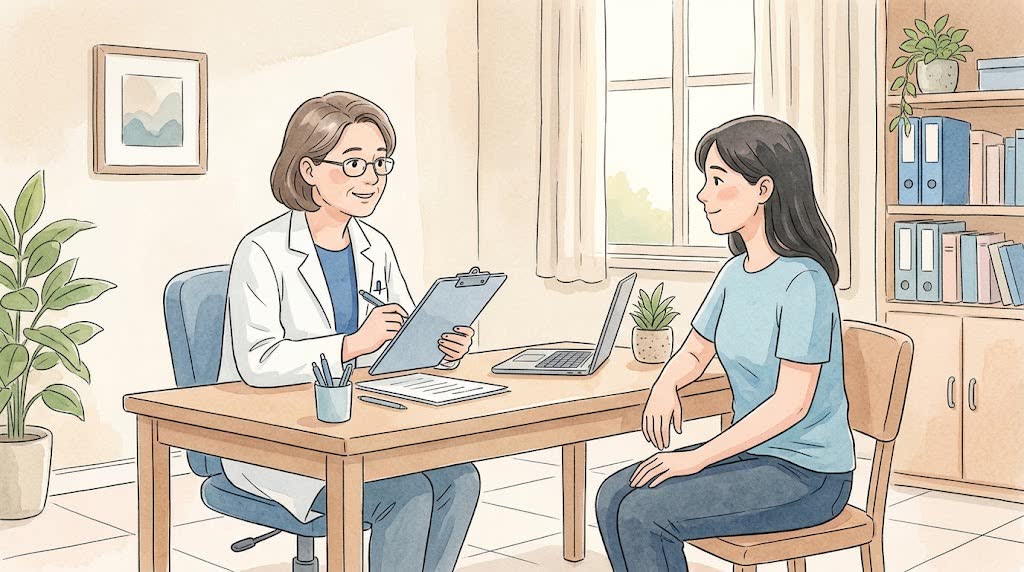
The doctor looks at and feels your breasts and armpits. If needed, an ultrasound or mammogram is ordered.
If you feel a lump, have breast pain or nipple discharge, or for a routine check.
⏱ Duration: usually 15 to 30 minutes; you get the findings right away
Be sure to tell your doctor
How to prepare
- Best timing. Usually days 5 to 12 of your cycle, when the breasts are less swollen. After menopause, any day. Check with the clinic.
- Before the visit. Do not put cream or deodorant on your breasts or armpits.
- Clothes. A two-piece outfit is easiest. You only need to take off your top.
What to bring
- Your ID
- Past breast ultrasounds and mammograms, if you have them
- A list of your medicines
How it goes
- The doctor asks about your concerns and health
- You undress to the waist
- The doctor looks at your breasts standing and sitting, sometimes with your arms raised
- Then your breasts and armpits are felt while you lie down
- The doctor explains the findings and orders tests if needed
What you'll feel
- The exam is usually painless
- If your breasts are tender, it may be uncomfortable. Tell the doctor
Afterwards
- If an ultrasound or mammogram was ordered, book it on a good day of your cycle
- Check your breasts yourself once a month at home. Your doctor will show you how
Common questions
At what age should I start seeing a breast specialist?
Regular routine checks are usually advised, and mammograms from age 40. If you have symptoms, at any age.
Is a breast lump always dangerous?
No. Most lumps are benign. But you must show it to a doctor.