
H. pylori stool test
H. pylori test · Helicobacter pylori · H. pylori stool antigen · stomach bacteria test
This is a stool test. It looks for traces of a bacterium that lives in the stomach and can cause gastritis and ulcers.
For stomach pain or heaviness, heartburn, ulcers, stomach disease in relatives, or to check after treatment.
⏱ Duration: collecting at home takes a few minutes; results usually come in 1 to 3 days
Be sure to tell your doctor
How to prepare
- Medicines. Antibiotics and acid medicines can change the result. Do not stop them on your own. Tell your doctor. They will decide if a break is needed.
- Container. Buy a sterile container with a small scoop at a pharmacy, or get one at the lab.
- After treatment. A follow-up test is usually done at least 4 weeks after treatment ends. Your doctor will tell you when.
What to bring
- The container with the stool sample
- Your test request form
How it goes
- Pass stool into a clean, dry pot or onto clean plastic wrap, not from the toilet bowl
- Use the scoop in the lid to take a little stool
- Close the container tightly and label it
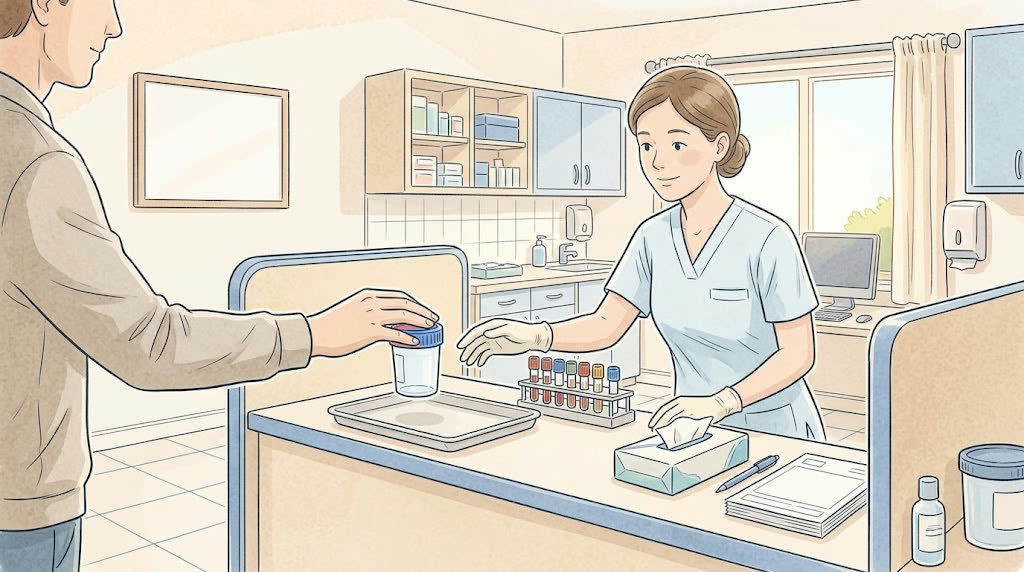
- Take it to the lab the same day
What you'll feel
- Nothing. The test is painless
Afterwards
- If you cannot take it right away, the container is usually kept in the fridge. Ask the lab how long
- Results usually come in 1 to 3 days. The lab will tell you when
- If the bacterium is found, your doctor will prescribe treatment
Contact a doctor straight away if
- Black stools, or vomiting blood or something like coffee grounds: call emergency services
Common questions
Why a stool test instead of a blood test for H. pylori?
Stool shows if the bacterium is there right now. Blood antibodies can stay after treatment.
Should my family be tested?
Your doctor decides. Usually people with symptoms are tested.