
HPV test
HPV test · human papillomavirus test · high-risk HPV test · cervical screening
The gynecologist takes a sample from your cervix with a soft brush. The lab checks it for human papillomavirus.
To help prevent cervical cancer, usually from age 30; for abnormal Pap test results; before and after cervical treatment.
⏱ Duration: the sample takes 1 to 2 minutes; results usually come in a few days
Be sure to tell your doctor
How to prepare
- Periods. The sample is not taken during your period. Mid-cycle is best.
- 2 days before. No sex, douching, vaginal suppositories, creams, or tampons.
- Exam. If a colposcopy is planned, the sample is usually taken before it.
What to bring
- Your referral
- Your ID
- Past smear results, if you have them
How it goes
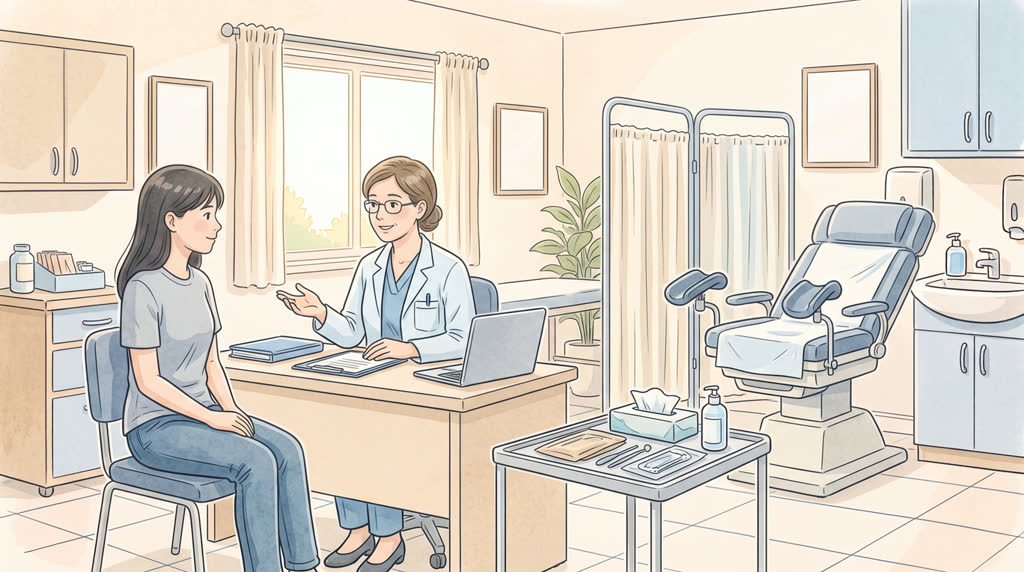
- You undress below the waist and sit in the exam chair
- The doctor inserts a speculum to see the cervix
- A soft brush is moved over the cervix for a few seconds
- The brush is placed in a tube with liquid
- The speculum is removed, and you can get dressed
What you'll feel
- Pressure and mild discomfort from the speculum
- Sometimes a brief cramping pain low in the belly
Afterwards
- A little spotting the same day is normal
- Results usually come in a few days. The lab will tell you when
- If HPV is found, your doctor will tell you if you need a Pap test or a colposcopy
Contact a doctor straight away if
- Heavy bleeding or severe pain low in the belly after the test: see a doctor
Common questions
Does finding HPV mean cancer?
No. HPV is common and usually goes away by itself. Your doctor keeps watch to catch any changes early.
How often should I have an HPV test?
Usually every few years if the result is normal. Your doctor will tell you how often.