
NIPT (non-invasive prenatal test)
NIPT · cell-free DNA test · prenatal DNA screening · Down syndrome blood test
Blood is taken from the mother's vein. It contains the baby's DNA, which is used to estimate the risk of some chromosome conditions.
Usually from 10 weeks of pregnancy, to estimate the risk of Down syndrome and other chromosome conditions, especially if screening showed a high risk.
⏱ Duration: the blood draw takes 3 to 5 minutes; results usually come in 7 to 14 days
Be sure to tell your doctor
How to prepare
- Timing. Usually done no earlier than 10 weeks. Your doctor or clinic will tell you when.
- Food. Usually no fasting is needed. Check with the clinic.
- Clothing. Wear a sleeve that is easy to roll up above the elbow.
What to bring
- Your referral
- Your ID
- Ultrasound results showing how far along you are
How it goes
- You fill out a form: weeks of pregnancy, height, weight, and pregnancy details
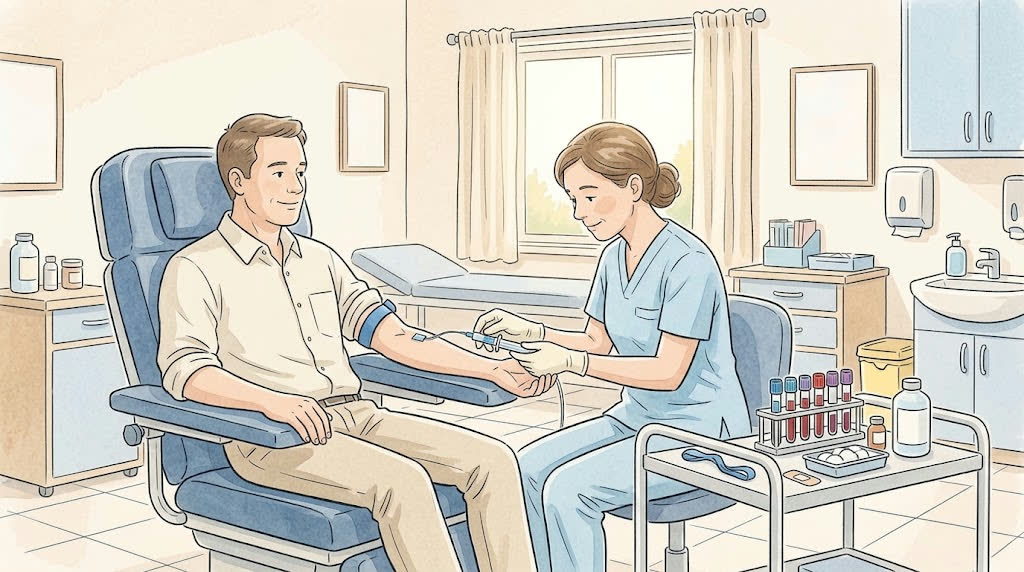
- You sit down and rest your arm on the armrest
- A band is tightened above your elbow, and the skin is wiped
- Blood is drawn into a special tube
- The needle comes out, and a cotton pad is pressed on
What you'll feel
- A quick prick, like a pinch
- The test is safe for the baby. Blood is taken only from the mother
Afterwards
- Press the cotton pad for 3 to 5 minutes
- Results usually come in 7 to 14 days
- If the risk is high, your doctor will offer more tests. NIPT is not a final diagnosis
Common questions
Can NIPT harm the baby?
No. Only the mother's blood is taken from a vein, like a regular test.
If NIPT is fine, can I skip the ultrasound screening?
No. The ultrasound shows something else: how the organs are developing. Your doctor usually orders both.
Can I find out the baby's sex?
Many tests show it. Ask the clinic if you want to know.