
← All services · Heart, lungs and nerves tests
ECG for children
child ECG · pediatric ECG · kids' EKG · ECG for school or sports
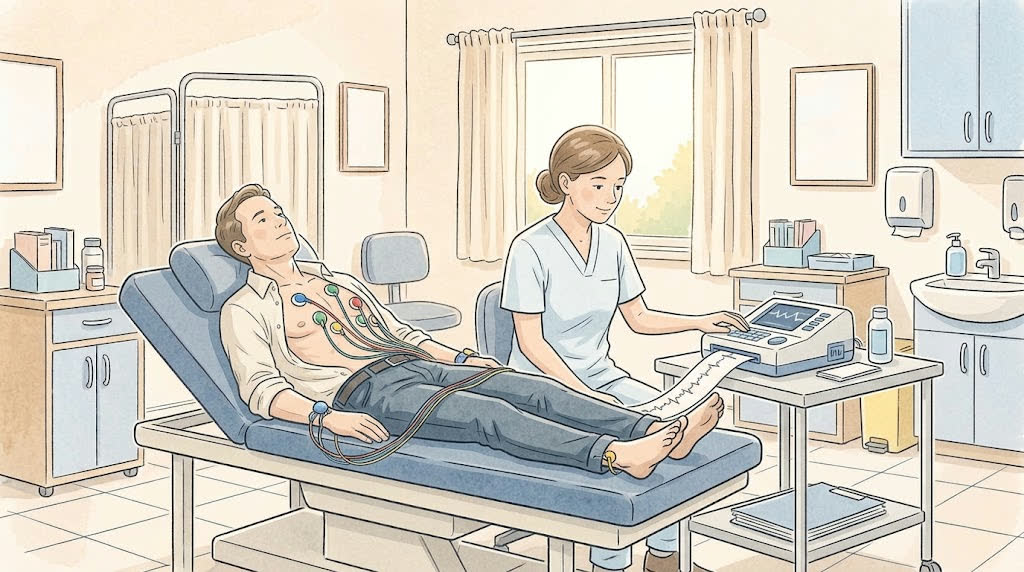
A nurse records your child's heart activity with sticky pads called electrodes. It is quick, safe, and painless.
At a routine checkup, before sports, kindergarten, or school, or for a heart murmur, fainting, or a racing heart.
⏱ Duration: usually 5 to 10 minutes; the report is often ready the same day
Be sure to tell your doctor
How to prepare
- Prep. None needed. Your child can eat and drink.
- Clothing. Comfortable clothes, so the chest, forearms, and lower legs are easy to uncover.
- Skin. Do not put cream on the chest on the day of the ECG.
- Mindset. Tell your child: the stickers will feel cold, but it will not hurt.
What to bring
- The referral
- Past ECGs, if you have them
- A sheet for a baby
- A toy, to distract your child
How it goes
- Your child lies on the couch, and you stay close
- Suction cups or stickers are put on the arms, legs, and chest
- Your child is asked to lie still and not talk
- The recording takes 1 to 2 minutes
- The electrodes are removed
What you'll feel
- Cold stickers. It does not hurt
- Babies sometimes cry, and the recording is repeated once they calm down
Afterwards
- You can go back to your usual day right away
- The doctor's report is usually ready the same day
- Go over the results with your pediatrician
Common questions
Why does a child's ECG look different from an adult's?
Children have different normal values. The pulse is faster, and much that is unusual in adults is normal for a child.
If my child cries, will the recording be ruined?
It might. Then they wait until your child calms down and record again.